Table of Contents
Published: October 6, 2025
Read Time: 22.7 Mins
Total Views: 533
As an infectious disease physician who has witnessed vaccination campaigns across multiple continents, I have seen firsthand how global vaccination efforts represent humanity’s most successful intervention against preventable mortality. Few public health achievements match the scale and impact of coordinated international immunization programs, which prevent an estimated 3.5 to 5 million deaths annually from vaccine preventable diseases including measles, whooping cough, and polio.
The transformation has been remarkable. When I began my career in infectious disease medicine, many conditions that now seem historical were still claiming thousands of lives. The eradication of smallpox in 1980 demonstrated the extraordinary power of coordinated global vaccination efforts, proving that sustained international cooperation could eliminate even the most feared infectious diseases from human populations. This success established the foundation for subsequent disease eradication programs and showed the world what was possible when political support aligned with scientific capability.
Today’s global vaccination landscape reflects both unprecedented achievements and persistent challenges. Wild poliovirus, which paralyzed children across 125 countries in 1988, now circulates in just two countries: Afghanistan and Pakistan. Measles deaths decreased by 73% between 2000 and 2018 through expanded vaccination coverage, preventing millions of childhood deaths. Perhaps most remarkably, the COVID-19 pandemic response saw over 13 billion vaccine doses administered globally within three years of the pandemic’s onset, demonstrating our enhanced capacity for rapid vaccine development and deployment.
Yet significant work remains. The COVID-19 pandemic exposed deep inequities in global health systems and revealed how quickly decades of progress can be threatened. Understanding both our successes and ongoing challenges provides essential context for strengthening global vaccination systems in the years ahead.
The Global Vaccination Revolution: Saving Millions of Lives Worldwide
The scope of global vaccination achievements extends far beyond any single disease eradication program. Through systematic review of vaccination impact over the past century, we can document how immunization has fundamentally altered the trajectory of human health. The twentieth century witnessed the development of effective vaccines against diseases that had terrorized previous generations, transforming childhood survival rates and extending healthy life expectancy across populations worldwide.
Routine immunization programs now protect children against more than a dozen infectious diseases, with coverage levels reaching unprecedented heights in many regions. The measles vaccine alone has prevented an estimated 21 million deaths since 2000, making it one of the most cost-effective interventions in global health. Similarly, vaccination programs targeting whooping cough have reduced childhood mortality from this respiratory infection by over 90% in countries with high vaccination coverage.

The global polio eradication initiative represents perhaps the most ambitious disease eradication effort in human history. Since its launch in 1988, this comprehensive program has reduced wild poliovirus cases by more than 99.9%, bringing us closer to joining smallpox as only the second human disease to be completely eradicated. The initiative has involved supplementary immunization campaigns reaching hundreds of millions of children, sophisticated surveillance systems to detect and respond to outbreaks, and unprecedented coordination between international organizations, national governments, and local communities.
Beyond these flagship programs, global vaccination has enabled the control and elimination of numerous other conditions. The Americas achieved elimination of rubella in 2015 through coordinated regional vaccination efforts. Multiple countries have eliminated maternal and neonatal tetanus, a condition that previously killed thousands of mothers and newborns annually. Several nations have eliminated guinea worm disease through combined water sanitation and vaccination strategies, reducing cases from 3.5 million in 1986 to fewer than 20 today.
Current State of Global Vaccination Coverage
Global vaccination coverage has reached historic highs while simultaneously revealing persistent disparities that demand continued attention. The World Health Organization has established ambitious targets for reaching 90% coverage for routine childhood vaccines by 2030, recognizing that achieving this threshold would prevent millions of additional deaths and substantially reduce global health inequities.
Current coverage patterns reflect both remarkable progress and concerning gaps. For the critical third dose of diphtheria-tetanus-pertussis vaccine (DTP3), global coverage reached 86% in 2022, representing protection for approximately 116 million children. However, this figure masks significant regional variations, with coverage ranging from 95% in Western Europe to 72% in sub-Saharan Africa. These disparities translate into real consequences for child health, with unvaccinated children facing substantially higher risks of severe illness and death from infectious diseases.
The COVID-19 pandemic severely disrupted routine vaccination services worldwide, creating setbacks that continue to affect coverage levels. An estimated 22 million children missed their first measles vaccine dose in 2023, representing the largest cohort of susceptible children in recent years. This disruption has created pockets of vulnerability that require intensive catch-up campaigns to prevent outbreaks of vaccine preventable diseases.
Vaccination Coverage by Region
The introduction of new vaccines represents another dimension of progress in global vaccination. Since 2000, vaccines against human papillomavirus (HPV), rotavirus, and pneumococcal disease have been introduced in dozens of countries, expanding the protective umbrella of routine immunization. However, access to these newer vaccines remains highly uneven, with many low-income countries still lacking systematic programs for these interventions.
Coverage analysis reveals that while high-income countries often achieve vaccination rates exceeding 95%, many low-income countries struggle to reach even 80% coverage for basic childhood vaccines. This gap reflects not just resource constraints but also challenges in health care infrastructure, supply chain management, and health education systems. Tracking progress toward the Immunization Agenda 2030 goals requires monitoring these disparities while implementing targeted interventions to reach the most vulnerable populations.
International Coordination: The Architecture of Global Vaccination
The success of global vaccination depends fundamentally on the coordination mechanisms that align resources, standards, and strategies across national boundaries. The World Health Organization serves as the central coordinating body, setting global vaccination policies, establishing safety standards, and providing technical guidance to member countries. WHO’s leadership role extends from routine immunization recommendations to emergency response coordination during disease outbreaks, ensuring that vaccination strategies reflect the best available scientific evidence while accounting for local contexts and constraints.
The GAVI Alliance represents one of the most impactful innovations in global health financing and vaccine delivery. Since its establishment in 2000, GAVI has vaccinated over 980 million children and prevented an estimated 16.2 million deaths through strategic partnerships between donor governments, recipient countries, vaccine manufacturers, and implementing organizations. GAVI’s approach combines financial support with technical assistance, helping countries strengthen their immunization systems while ensuring sustainable financing for vaccine procurement and delivery.
UNICEF functions as the world’s largest vaccine procurer, supplying approximately 45% of all vaccines used for children under five globally. This massive procurement operation enables cost efficiencies through bulk purchasing while ensuring quality standards and supply chain reliability. UNICEF’s logistics capabilities extend to the most remote and challenging environments, delivering vaccines to conflict zones, disaster-affected areas, and isolated communities where commercial supply chains cannot operate effectively.

The Coalition for Epidemic Preparedness Innovations (CEPI) addresses the critical need for vaccine development against epidemic threats, supporting research and development for vaccines against diseases with pandemic potential. CEPI’s work includes advancing vaccine technologies, strengthening manufacturing capacity, and establishing frameworks for rapid vaccine deployment during health emergencies. This preparedness approach recognizes that effective pandemic response requires proactive investment in vaccine research rather than reactive scrambling during crisis periods.
Financing Global Vaccination Efforts
The economics of global vaccination reveal both the massive scale of investment required and the extraordinary returns generated by these programs. The global vaccine market reached approximately $59 billion in 2023, reflecting substantial growth driven by both routine immunization needs and pandemic response requirements. This market expansion has supported increased manufacturing capacity, technological innovation, and geographic diversification of production capabilities.
Donor funding mechanisms provide essential support for vaccination programs in low-income countries, with GAVI replenishment cycles representing the largest multilateral health financing commitments. The most recent GAVI replenishment in 2020 raised $8.8 billion for the 2021-2025 period, demonstrating sustained political commitment to global vaccination despite competing fiscal pressures. World Bank health financing provides additional support through country-specific loans and grants that strengthen health systems infrastructure.
However, financing challenges emerge as countries transition from donor support to domestic funding responsibility. Middle-income countries often face the greatest difficulties, as they lose eligibility for concessional financing while lacking the fiscal capacity to fully fund comprehensive vaccination programs. This “middle-income trap” affects millions of children and requires innovative financing mechanisms that bridge the gap between donor support and full domestic funding.
Cost-effectiveness analysis consistently demonstrates that vaccination represents one of the highest-return investments in development. Every dollar invested in vaccination yields an estimated $44 in economic benefits through reduced healthcare costs, improved productivity, and extended healthy life years. These calculations do not fully capture the broader social and economic benefits of vaccination, including reduced healthcare system strain, enhanced pandemic preparedness, and increased social stability through improved population health.
Vaccine Equity: Addressing Global Health Disparities
Vaccine equity represents both a moral imperative and a practical necessity for global health security. The COVID-19 pandemic starkly illustrated how inequality in vaccine access undermines global health goals, with high-income countries administering 16 times more vaccine doses per capita than low-income countries during 2021. This disparity not only perpetuated suffering in underserved populations but also enabled continued viral circulation and variant emergence that threatened global recovery efforts.
The barriers to vaccine access in low-resource settings are multifaceted and interconnected. Supply chain challenges pose fundamental constraints, particularly the cold chain requirements that demand continuous refrigeration from manufacturer to patient. Many remote areas lack reliable electricity, making it difficult to maintain the temperature-controlled storage necessary for vaccine viability. Transportation infrastructure limitations compound these challenges, particularly in rural areas where road networks may be impassable during certain seasons.
Healthcare workforce shortages represent another critical barrier, particularly in sub-Saharan Africa where physician-to-population ratios fall far below WHO recommendations. Vaccination delivery requires trained personnel who can safely administer vaccines, manage adverse events, and provide health education to communities. The limited availability of qualified health workers constrains the reach and quality of vaccination programs, even when vaccines themselves are available.
Cultural and social barriers require careful attention and culturally appropriate responses. Vaccine hesitancy reflects complex interactions between historical experiences, religious beliefs, trust in healthcare systems, and access to accurate health information. In some communities, previous negative experiences with healthcare systems or government programs have created deep skepticism about vaccination campaigns. Addressing these concerns requires sustained community engagement, transparent communication, and demonstration of respect for local values and decision-making processes.
Innovative Solutions for Vaccine Access
Creative approaches to vaccine delivery have emerged from necessity and innovation across multiple low-resource settings. Mobile vaccination units have proven effective in reaching remote populations in countries including Chad, Niger, and the Central African Republic, bringing vaccines directly to communities that cannot easily access fixed health facilities. These mobile teams often provide comprehensive primary healthcare services alongside vaccination, maximizing the impact of each visit and strengthening overall health system capacity.
Solar-powered refrigeration systems have revolutionized cold chain maintenance in off-grid communities, enabling vaccine storage in areas previously considered unreachable. These systems use photovoltaic panels to power specially designed refrigeration units that can maintain appropriate temperatures for several days without sunlight, providing reliability even during cloudy periods or equipment maintenance. The technology has been successfully deployed across Africa and Asia, extending vaccination coverage to millions of previously underserved children.

Community health worker programs have demonstrated remarkable success in improving vaccination uptake, particularly in Rwanda and Ethiopia where trained community members provide basic health services including vaccination. These programs leverage local knowledge, language skills, and community trust to overcome barriers that formal healthcare systems cannot easily address. Community health workers receive targeted training in vaccine administration, safety protocols, and health education, enabling them to serve as bridges between formal health systems and their communities.
Drone delivery systems represent cutting-edge innovation in last-mile vaccine distribution, with successful pilots in Ghana and Rwanda demonstrating the potential for unmanned aircraft to reach remote or difficult-to-access areas. These systems can deliver vaccines, blood products, and other medical supplies to rural health facilities within hours rather than days, dramatically improving access to time-sensitive medical interventions. While still in pilot phases, drone delivery shows promise for scaling up to serve larger populations and more challenging geographic areas.
Regional Success Stories and Lessons Learned
Regional approaches to vaccination have yielded remarkable successes while providing valuable lessons for global health strategy. The Americas achieved elimination of rubella in 2015 through coordinated efforts led by the Pan American Health Organization, demonstrating how regional cooperation can accelerate progress beyond what individual countries could achieve independently. This success required sustained political commitment across diverse political systems, standardized surveillance protocols, and coordinated response to cross-border transmission.
The Western Pacific region has maintained polio-free status since 2000 through comprehensive surveillance systems and robust routine immunization programs. Countries in this region, including China, Australia, and Japan, have invested heavily in laboratory capacity for poliovirus detection and maintained high vaccination coverage even during political transitions and economic challenges. Their success illustrates how sustained investment in surveillance infrastructure and laboratory capacity creates resilient disease prevention systems.
India’s achievements in infectious disease control provide compelling evidence for the potential of large-scale vaccination programs in complex, resource-constrained settings. The country eliminated maternal and neonatal tetanus in 2015 through targeted vaccination campaigns that reached millions of women of reproductive age. India has maintained polio-free status since 2014 despite enormous logistical challenges, including vaccinating over 170 million children annually across diverse geographic and cultural contexts.
Nigeria’s progress represents one of the most significant recent victories in global health. After decades of interrupted poliovirus transmission, Nigeria successfully interrupted wild poliovirus circulation in 2020, overcoming substantial security challenges in northeastern regions affected by conflict. This achievement required innovative approaches including vaccination campaigns coordinated with security forces, community engagement strategies that addressed religious and cultural concerns, and sustained technical support from international partners.
Learning from Setbacks
Challenges in fragile states provide sobering lessons about the complex relationship between political stability and health system function. Vaccination campaigns in Syria, Yemen, and the Democratic Republic of Congo have faced enormous obstacles including active conflict, displaced populations, destroyed health infrastructure, and limited access for humanitarian workers. These experiences demonstrate that effective vaccination requires not just technical capacity but also political stability, security guarantees, and sustained international support.
Yellow fever outbreaks in Angola (2016) and Brazil (2017-2018) revealed vulnerabilities in routine immunization systems and emergency response capacity. Despite the availability of an effective vaccine, limited production capacity and delayed response contributed to hundreds of deaths and regional spread. These outbreaks prompted investments in increased vaccine manufacturing capacity and improved outbreak response protocols, but they also highlighted how supply constraints can undermine disease control efforts even when technical solutions exist.
The emergence of vaccine-derived poliovirus outbreaks has required fundamental reconsideration of oral polio vaccine strategies. While oral polio vaccine has been instrumental in reducing wild poliovirus circulation, the rare but real risk of vaccine-derived strains has necessitated careful risk-benefit analysis and development of improved vaccine formulations. This experience illustrates how even successful interventions require continuous monitoring and adaptation based on emerging evidence.
COVID-19 pandemic impacts on routine vaccination created widespread disruptions that continue to affect coverage levels globally. Health systems overwhelmed by pandemic response reduced routine services, while lockdown measures limited access to healthcare facilities. Recovery strategies have required intensive catch-up campaigns, enhanced surveillance for vaccine preventable diseases, and systematic efforts to rebuild community trust in vaccination programs. These lessons are informing pandemic preparedness plans to minimize disruption to essential health services during future health emergencies.
Emerging Challenges and Geopolitical Factors
Contemporary global vaccination faces increasingly complex challenges that extend beyond traditional public health concerns into geopolitical, environmental, and technological domains. Climate change represents a growing threat to global health security, expanding the geographic range of vector-borne diseases and creating new populations at risk for conditions like malaria, yellow fever, and dengue. These shifts require adaptive vaccination strategies that can respond to changing disease patterns while maintaining protection for traditional endemic areas.
Conflict zones present particular challenges for maintaining vaccination programs under international humanitarian law. Armed conflicts disrupt health systems, displace populations, and create security risks for healthcare workers attempting to deliver services. The protection of vaccination programs during conflicts requires coordination between military forces, humanitarian organizations, and local health authorities, often under dangerous and rapidly changing conditions.
Vaccine nationalism during the COVID-19 pandemic revealed how geopolitical considerations can undermine global health goals. Export restrictions, bilateral agreements that bypassed multilateral mechanisms, and competition for limited supplies contributed to global vaccine inequality and delayed pandemic recovery. These experiences have prompted discussions about pandemic treaties, enhanced manufacturing capacity, and governance mechanisms that can ensure more equitable vaccine access during future health emergencies.
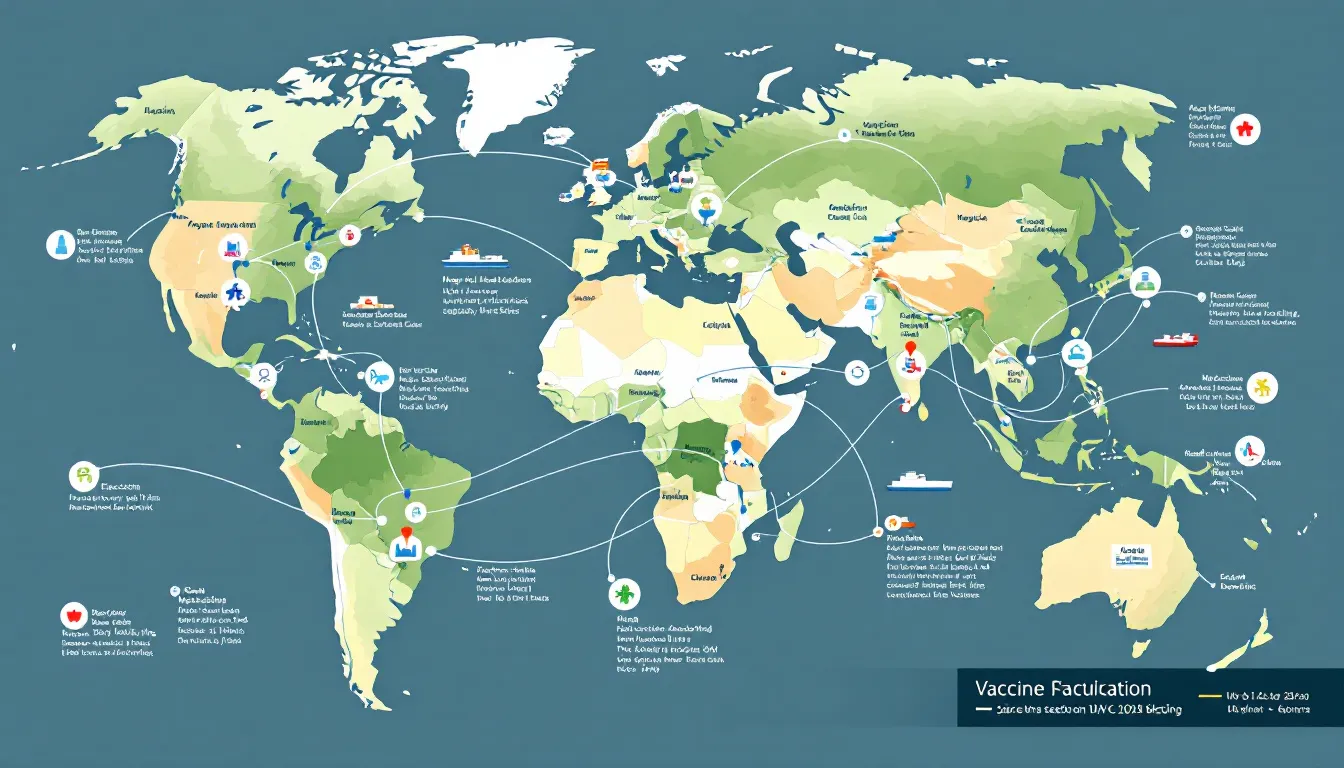
Supply chain vulnerabilities have become increasingly apparent as global vaccination programs expand and face new pressures. The concentration of vaccine manufacturing in a limited number of countries creates systemic risks that can affect global supply security. Recent efforts to diversify manufacturing capacity include technology transfer initiatives, regional manufacturing hubs, and investments in developing country production capabilities. However, building sustainable manufacturing capacity requires substantial time, investment, and technical expertise.
Antimicrobial resistance creates additional pressure for vaccine development as traditional treatment options become less effective. The emergence of drug-resistant tuberculosis, malaria parasites, and bacterial infections has increased the importance of prevention through vaccination. Research into vaccines against resistant pathogens represents a critical component of the global response to antimicrobial resistance, but development timelines often exceed the pace at which resistance emerges.
The rise of misinformation and vaccine hesitancy in both developed and developing countries poses fundamental challenges to vaccination program effectiveness. Social media platforms can rapidly spread false information about vaccine safety and efficacy, undermining public trust in immunization programs. Addressing misinformation requires sophisticated communication strategies, engagement with community leaders, and transparent sharing of accurate information about vaccine benefits and risks.
Future Strategies: Building Resilient Global Vaccination Systems
The future of global vaccination requires strategic investments in system resilience, technological innovation, and international cooperation mechanisms that can respond effectively to both routine immunization needs and emergency health threats. Pandemic preparedness has emerged as a central priority, with initiatives like the 100 Days Mission aiming to develop vaccines against epidemic threats within three months of pathogen identification. This ambitious timeline requires pre-positioned manufacturing capacity, streamlined regulatory processes, and sustained investment in research and development infrastructure.
mRNA technology transfer initiatives represent a transformative approach to addressing global vaccine equity through enhanced manufacturing capacity. Efforts to establish regional manufacturing hubs in Africa, Latin America, and Asia aim to reduce dependence on a limited number of suppliers while building technological capacity in developing countries. These initiatives require not just technology transfer but also workforce development, regulatory system strengthening, and sustainable financing mechanisms.
Digital health innovations offer unprecedented opportunities for improving vaccination delivery and monitoring. Blockchain technology can provide secure, tamper-proof records of vaccine administration and supply chain tracking, enabling better monitoring of coverage levels and rapid identification of supply chain disruptions. Artificial intelligence systems can improve demand forecasting, optimize supply chain logistics, and identify populations at highest risk for vaccine preventable diseases.
The One Health approach recognizes the interconnected nature of human, animal, and environmental health in vaccination strategy development. Many infectious diseases emerge from animal reservoirs or environmental sources, requiring vaccination strategies that address these connections. Coordinated vaccination of both human and animal populations can provide more comprehensive protection against zoonotic diseases while reducing the overall burden of infectious diseases.
Life-course immunization represents an expansion beyond traditional childhood vaccination programs to include adolescent, adult, and elderly vaccination strategies. As populations age and new vaccines become available, comprehensive immunization programs must address the full spectrum of age-related health risks. This includes vaccines against conditions like shingles, pneumonia, and influenza that primarily affect older adults, as well as vaccines against sexually transmitted infections that are most effective when administered during adolescence.
Innovation Pipeline
The vaccine development pipeline includes next-generation vaccines that could transform global health outcomes over the coming decades. Universal influenza vaccines that provide protection against multiple strains could eliminate the need for annual vaccine updates while providing broader protection against pandemic influenza strains. Malaria vaccines, including the recently approved RTS,S and new formulations under development, offer hope for controlling one of the world’s most devastating infectious diseases.
Tuberculosis vaccines represent one of the most urgent needs in global health, given the enormous burden of disease and the challenges posed by drug-resistant strains. Multiple candidates are advancing through clinical trials, including vaccines that could prevent both pulmonary and extrapulmonary tuberculosis in diverse populations. Success in tuberculosis vaccine development could prevent millions of deaths while reducing transmission of this persistent global health threat.
Novel delivery methods promise to improve vaccine accessibility and effectiveness through innovations in administration technology. Microneedle patches could enable self-administration of vaccines without injection, reducing costs and improving acceptability. Oral vaccines eliminate injection requirements entirely while potentially providing mucosal immunity that injection-based vaccines cannot achieve. Intranasal formulations offer another needle-free option that may provide superior protection against respiratory pathogens.
Personalized vaccination approaches based on genetic and immunological factors represent the frontier of precision medicine applied to immunization. Understanding individual variations in immune response could enable optimized vaccination schedules that provide maximum protection with minimal adverse effects. This approach requires advances in immunological understanding, genetic testing capabilities, and health system capacity to implement individualized recommendations.
Combination vaccines continue to evolve toward formulations that protect against multiple diseases with fewer injections, improving coverage rates while reducing costs and logistical complexity. Advanced combination vaccines under development could protect against dozens of diseases with a single injection series, dramatically simplifying immunization schedules while maintaining high efficacy against multiple pathogens.
Conclusion
Global vaccination represents humanity’s most successful intervention against infectious disease mortality, demonstrating what becomes possible when scientific innovation aligns with international cooperation and sustained political commitment. The achievements of the past decades—from smallpox eradication to the dramatic reduction in childhood mortality from vaccine preventable diseases—provide compelling evidence for the transformative potential of coordinated global health action.
Yet current challenges remind us that progress in global health requires continuous vigilance, adaptation, and recommitment to equity principles. The COVID-19 pandemic revealed both our enhanced capacity for rapid vaccine development and our persistent failures to ensure equitable access to life-saving interventions. Climate change, geopolitical tensions, and emerging infectious diseases will test our vaccination systems in new ways that demand innovative solutions and strengthened international cooperation.
The path forward requires sustained investment in manufacturing capacity, health system strengthening, and research and development infrastructure that can respond to both routine needs and emergency threats. Perhaps most importantly, it requires recognition that global health security depends fundamentally on health equity—that protecting the most vulnerable populations serves not just moral imperatives but also practical necessities for protecting all populations.
As we look toward 2030 and beyond, global vaccination must evolve from a collection of disease-specific programs into an integrated, resilient system capable of addressing the full spectrum of infectious disease threats. This transformation will require unprecedented cooperation between governments, international organizations, private sector partners, and communities worldwide. The stakes could not be higher, and the potential rewards—measured in millions of lives saved and suffering prevented—justify any investment we can make in building more effective, equitable global vaccination systems.
The future of global health depends on our collective commitment to ensuring that the benefits of vaccination reach every child, in every community, regardless of geography, economic status, or political circumstances. This is both our greatest public health opportunity and our most urgent moral obligation.