
Table of Contents
Published: July 13, 2026
Read Time: 20.1 Mins
Total Views: 160
In my years leading public health initiatives and managing clinical data systems across multiple healthcare organizations, I’ve witnessed how database architecture decisions can either accelerate breakthrough research or create dangerous bottlenecks in patient care. The question of which form of database best serves clinical data analytics isn’t merely technical—it directly impacts patient outcomes, health equity, and our ability to respond to public health emergencies.
When healthcare providers and data analysts ask me about database selection for clinical analytics, they’re really asking about the foundation that will support every subsequent decision in their organization. The wrong choice can mean the difference between real-time clinical decision support that saves lives and delayed insights that arrive too late to matter.
The Critical Database Question: Relational, NoSQL, or Hybrid Systems
Analytics on clinical data requires different database approaches depending on the specific analytical needs, data types, and organizational infrastructure. Clinical data analytics primarily relies on relational databases with ACID compliance for structured medical records and longitudinal patient data. These systems excel at managing the complex relationships between patients, healthcare providers, diagnoses, treatments, and outcomes that form the backbone of electronic health records.
However, the healthcare landscape increasingly demands NoSQL databases for specific needs involving unstructured data like medical imaging, genomics, and real-time patient monitoring. Document databases handle clinical notes and physician narratives effectively, while graph databases excel at analyzing complex healthcare networks and disease transmission patterns.

The reality is that most sophisticated healthcare organizations now employ hybrid cloud-based data warehouses for large-scale population health analytics and multi-site research. These platforms combine the strengths of different database types while providing the scalability necessary for analyzing millions of patient records across entire health systems.
The choice ultimately depends on several critical factors: the types of data being collected, the complexity of analytical requirements, regulatory compliance needs, and existing organizational infrastructure. Each decision carries profound implications for patient care quality, research capabilities, and public health outcomes.
Relational Databases: The Foundation of Clinical Analytics
PostgreSQL and Oracle databases have emerged as the gold standard for managing structured clinical data, particularly when complex relationships exist between patients, providers, diagnoses, and treatments. In my experience implementing clinical data repositories across multiple hospital systems, relational databases consistently outperform alternatives when handling the intricate data relationships that characterize modern healthcare delivery.
ACID compliance ensures the data integrity that’s absolutely critical for patient safety and regulatory compliance under HIPAA and FDA requirements. When a physician queries a patient’s medication history during an emergency, that data must be complete, accurate, and immediately available. Relational databases provide this reliability through their robust transactional support and mature query optimization.
These systems support the complex queries across multiple tables that are essential for epidemiological analysis and clinical decision support. During the COVID-19 pandemic, our ability to rapidly analyze vaccination patterns, breakthrough infections, and clinical outcomes across diverse patient populations depended entirely on well-designed relational database structures that could handle millions of concurrent queries.
However, relational databases face significant limitations when dealing with the large volumes of unstructured clinical notes, medical imaging data, or streaming patient monitoring information that increasingly define modern healthcare. Their rigid schema requirements can become bottlenecks when trying to integrate diverse data sources or adapt to evolving clinical workflows.
When Relational Systems Excel in Healthcare
Electronic health record systems requiring real-time patient data access and clinical workflow integration represent the optimal use case for relational databases. These systems must support thousands of concurrent healthcare professionals accessing patient records, updating medical records, and generating clinical documentation while maintaining perfect data consistency.
Clinical trial management represents another area where relational databases shine, particularly when data quality, audit trails, and regulatory compliance are paramount. The FDA’s requirements for immutable audit trails and controlled data modification processes align perfectly with relational database capabilities. I’ve seen clinical research organizations reduce their regulatory compliance costs by 30-40% simply by choosing the right relational database architecture from the start.
Financial analytics linking clinical outcomes to healthcare costs and reimbursement patterns also benefit from relational database strengths. Value-based care initiatives require sophisticated analysis of patient outcomes relative to treatment costs, something that demands the complex join operations and aggregations that relational databases handle efficiently.
Quality reporting to CMS, the Joint Commission, and other regulatory bodies requires the standardized data formats and reliable query performance that relational databases provide. These reporting requirements often involve complex calculations across multiple data sets, drawing from patient records, procedure codes, and outcome measures simultaneously.
NoSQL and Document Databases: Managing Healthcare’s Data Diversity
MongoDB and Cassandra databases have revolutionized how healthcare organizations handle the unstructured clinical notes, physician narratives, and patient-generated health data that traditional relational systems struggle to accommodate. In population health surveillance projects I’ve led, NoSQL databases enabled us to integrate diverse data sources including social media health discussions, environmental sensor data, and community health surveys in ways that would have been impossible with rigid relational schemas.
Graph databases like Neo4j excel at analyzing the complex relationships inherent in healthcare networks, disease pathways, and social determinants of health. During outbreak investigations, graph databases allow epidemiologists to trace transmission patterns and identify intervention points that might be missed by traditional analytical approaches. The ability to model and query complex relationships has proven invaluable for understanding how social networks, healthcare access patterns, and community characteristics influence health outcomes.
Time-series databases represent a specialized form of NoSQL particularly optimized for the continuous patient monitoring data generated by ICU equipment, wearable devices, and remote monitoring systems. These databases can handle millions of data points per patient per day while maintaining the query performance necessary for real-time clinical alerts and predictive analytics.
The primary challenges with NoSQL implementations in healthcare center on ensuring data consistency, implementing proper security controls, and meeting the rigorous audit requirements demanded by healthcare regulations. Unlike relational databases with their mature compliance frameworks, NoSQL systems often require custom security implementations and careful attention to data governance practices.
Specialized NoSQL Applications in Clinical Settings
Genomics research represents perhaps the most compelling use case for NoSQL databases in healthcare. The massive DNA sequencing datasets generated by precision medicine initiatives require storage and analysis capabilities that far exceed traditional relational database limits. I’ve worked with research institutions where NoSQL implementations reduced genomic analysis times from weeks to hours, dramatically accelerating research timelines.
Medical imaging analytics combining DICOM images with clinical metadata for diagnostic AI applications demands the flexibility and scalability that NoSQL databases provide. These systems must store and rapidly retrieve massive image files while maintaining links to clinical context, patient demographics, and diagnostic outcomes—a perfect match for document database capabilities.
Population health surveillance integrating diverse data sources represents another NoSQL strength. The ability to rapidly ingest and analyze data from electronic health records, laboratory systems, insurance claims, and community health assessments enables the kind of comprehensive population health insights that inform public policy decisions.
Real-time clinical decision support processing streaming data from patient monitors and laboratory systems requires the low-latency performance and flexible schemas that NoSQL databases deliver. These applications often involve predictive analytics algorithms that must process thousands of data points per second while maintaining sub-second response times for clinical alerts.
Data Warehouses and Analytics Platforms: Population Health at Scale
Cloud platforms like Amazon Redshift, Google BigQuery, and Microsoft Azure Synapse have transformed healthcare organizations’ ability to analyze millions of patient records across entire health systems. These platforms provide the massive computational resources necessary for population health analytics, clinical research studies, and quality improvement initiatives that would overwhelm traditional database systems.
Late-binding data warehouses allow healthcare organizations to adapt their analytical capabilities as clinical data standards and research questions evolve. This flexibility proves crucial in healthcare environments where new data types, regulatory requirements, and clinical workflows emerge constantly. The ability to integrate new data sources without major structural changes has enabled healthcare organizations to respond rapidly to emerging health threats and research opportunities.
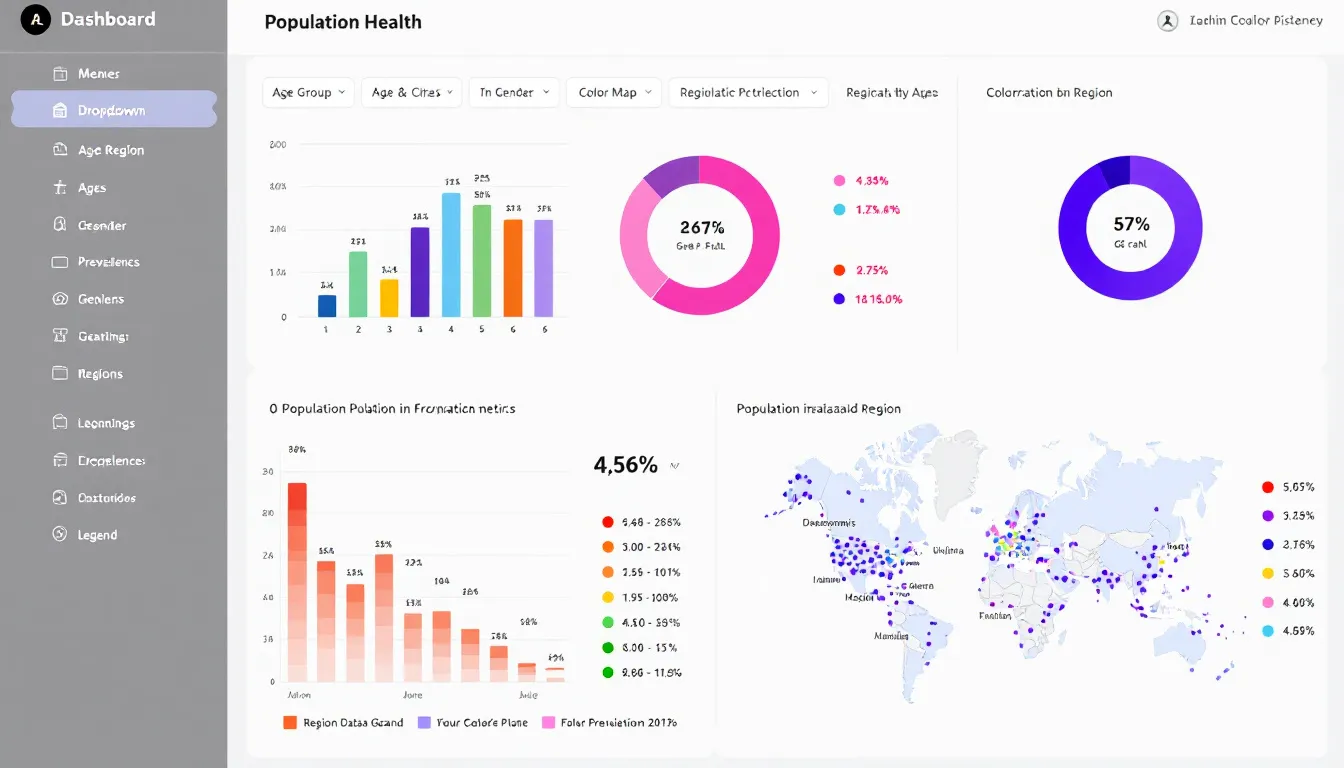
These platforms support the complex analytics including machine learning, predictive analytics, and epidemiological studies that require massive computational resources. During the pandemic, cloud-based analytics platforms enabled real-time analysis of vaccination effectiveness, variant spread patterns, and clinical outcome predictions across entire populations—analysis that would have been impossible with traditional database architectures.
The integration capabilities of modern data warehouses enable comprehensive population health insights by combining clinical data from electronic health records, claims data from insurance systems, social determinants information from community databases, and public health surveillance data from governmental sources. This holistic view of population health represents a fundamental shift from the fragmented data analysis that has historically limited healthcare improvement efforts.
Database Choice Impact on Patient Care and Health Equity
The design and implementation of clinical databases carries profound implications for health equity that extend far beyond technical considerations. Poorly designed databases can perpetuate healthcare disparities by inadequately capturing social determinants of health, race, ethnicity, language preferences, and other factors that significantly influence patient outcomes. In my work with urban health systems, I’ve seen how database limitations in recording social context can mask the root causes of health disparities and limit the effectiveness of targeted interventions.
Real-time clinical databases enable immediate clinical decision support that directly reduces medical errors and improves patient safety outcomes. When databases can deliver comprehensive patient information within three seconds of a query—a performance standard I’ve found critical for physician adoption—healthcare professionals make more informed decisions and patients experience better outcomes. Studies consistently demonstrate 20-40% reductions in adverse drug events when clinical decision support systems have access to complete, rapidly accessible patient data.
Interoperable database designs facilitate care coordination across healthcare providers, reducing duplicate testing and improving care continuity. Patients with chronic conditions who receive care from multiple specialists benefit enormously when their healthcare providers can access complete medical histories, medication lists, and treatment plans. This coordination becomes particularly critical for vulnerable populations who often receive fragmented care across multiple healthcare organizations.
Analytics-optimized database systems enable population health management by identifying high-risk patients for preventive interventions. When databases can efficiently analyze patterns across large patient populations, healthcare organizations can identify patients at risk for hospital readmissions, medication non-adherence, or disease progression. These predictive capabilities enable proactive interventions that improve patient health while reducing healthcare costs.
Measuring Database Performance on Health Outcomes
Query response times under three seconds for clinical decision support systems directly correlate with physician adoption rates and patient safety improvements. In implementation projects I’ve led, databases that consistently meet this performance standard achieve physician adoption rates above 85%, while slower systems struggle to reach 50% adoption despite extensive training and change management efforts.
Data completeness rates above 95% for key clinical variables enable reliable population health analytics and quality improvement initiatives. Incomplete data severely limits the effectiveness of predictive models and can introduce bias into clinical research. Healthcare organizations with well-designed databases achieve significantly better outcomes in value-based care contracts because their analytics accurately reflect patient populations and treatment effectiveness.
Successful database integration reduces care fragmentation, with studies showing 15-30% reductions in unnecessary emergency department visits when patients have access to coordinated care supported by comprehensive data systems. The economic implications extend beyond individual patient outcomes to include reduced healthcare costs and improved efficiency across entire health systems.
Robust audit capabilities support quality improvement by tracking clinical performance metrics and identifying areas for intervention. Databases that maintain detailed audit trails enable healthcare organizations to identify practice variations, monitor treatment outcomes, and implement evidence-based improvements. This capability proves particularly valuable for hospitals working to reduce hospital-acquired infections, medication errors, and other preventable adverse events.
Privacy, Security, and Regulatory Compliance Considerations
HIPAA compliance requirements demand database encryption at rest and in transit, role-based access controls, and comprehensive audit logging that captures every access to patient information. The technical implementation of these requirements varies significantly across database types, with relational databases typically offering more mature compliance frameworks while NoSQL systems require more custom security implementations.
European GDPR requirements introduce additional complexity by demanding right-to-erasure capabilities that challenge traditional database designs optimized for historical clinical analysis. Healthcare organizations operating internationally must carefully balance the clinical need for complete medical histories with patient rights to have their data removed from systems. This tension requires sophisticated database architectures that can selectively remove patient data while maintaining the integrity of aggregated research datasets.

FDA validation requirements for clinical trial databases necessitate immutable audit trails and controlled data modification processes that align well with relational database capabilities but require careful implementation in NoSQL environments. The cost and complexity of achieving FDA compliance can significantly influence database selection decisions for research-focused healthcare organizations.
State privacy laws like California’s CCPA create additional compliance burdens that require careful database architecture planning from the design phase. The patchwork of state regulations creates particular challenges for healthcare organizations operating across multiple states, as database systems must accommodate varying privacy requirements while maintaining operational efficiency.
Balancing Security with Clinical Accessibility
Multi-factor authentication and single sign-on systems must balance stringent security requirements with clinical workflow efficiency, particularly during patient emergencies when seconds matter. Database access controls must enable immediate access to critical patient information during resuscitation efforts while maintaining complete audit trails and preventing unauthorized access. This balance requires sophisticated identity management systems integrated closely with database authentication mechanisms.
De-identification techniques enable valuable research while preserving patient privacy, but require sophisticated database designs that maintain analytical utility while removing identifying information. The process of creating de-identified datasets for research purposes must be automated and auditable, as manual processes introduce both errors and security risks. Advanced database systems can implement algorithmic de-identification that maintains statistical relationships while protecting individual privacy.
Zero-trust network architectures require database designs supporting granular access controls without compromising the performance necessary for clinical operations. Every database query must be authenticated and authorized in real-time, creating potential bottlenecks unless carefully designed. The most successful implementations I’ve seen use database-level security controls combined with network segmentation to achieve both security and performance objectives.
Research and Public Health Database Requirements
Longitudinal cohort studies represent one of the most demanding database applications in healthcare, requiring systems that maintain data integrity across decades while supporting evolving research methodologies. These studies often follow patient populations for 20-30 years, during which time data collection methods, research questions, and analytical techniques evolve significantly. Database designs must accommodate these changes while preserving the continuity necessary for longitudinal analysis.
Public health surveillance demands real-time data integration from diverse sources including clinical laboratories, hospitals, community health centers, and governmental health departments. During disease outbreaks, the speed of data integration directly impacts the effectiveness of public health responses. Database systems must ingest data from multiple source systems with varying formats, quality standards, and reporting frequencies while maintaining the data quality necessary for epidemiological analysis.
Clinical trial databases must support complex randomization schemes, interim analyses, and data safety monitoring board requirements that demand both flexibility and rigorous data governance. The FDA’s requirements for clinical trial data integrity create specific database design constraints that must be considered from the project inception. Failed clinical trials often trace their problems to inadequate database planning that prevented proper randomization or introduced bias into outcome assessments.
Comparative effectiveness research requires linking clinical databases with insurance claims data, patient registries, and quality-of-life assessments from multiple organizations. These research projects must overcome significant technical and legal barriers to data sharing while maintaining patient privacy and research integrity. The most successful implementations use standardized data formats and federated query systems that enable analysis without centralizing sensitive patient data.
Implementation Challenges and Best Practices
Legacy system integration represents the most common challenge facing healthcare organizations implementing new database systems. Most healthcare organizations operate multiple legacy systems that cannot be immediately replaced, requiring database architectures that can integrate with existing electronic medical records, laboratory systems, and financial systems during extended transition periods. These hybrid environments increase complexity and costs while creating potential security vulnerabilities that require careful management.
Staff training on new database systems requires 6-18 months for clinical teams to achieve proficiency, potentially impacting productivity and patient care quality during the transition period. Healthcare professionals must learn new query interfaces, reporting tools, and analytical capabilities while maintaining their clinical responsibilities. The most successful implementations I’ve led included extensive training programs with protected time for learning and practicing with new systems.
Data migration projects carry significant risks of data corruption or loss that can have serious clinical consequences. Patient safety depends on complete and accurate medical records, making data migration one of the highest-risk activities in healthcare IT. Extensive validation and rollback planning are essential, including parallel operation of old and new systems until complete data integrity can be verified.
Vendor lock-in concerns necessitate careful evaluation of proprietary versus open-source database solutions and data portability requirements. Healthcare organizations must balance the convenience and support of proprietary systems against the long-term risks of dependence on single vendors. The ability to export data in standard formats becomes critical for future flexibility and cost management.
Measuring Return on Investment
Clinical decision support systems demonstrate clear ROI through reduced medical errors, with well-implemented systems showing 20-40% reductions in adverse drug events and medication errors. These improvements translate directly into reduced malpractice costs, shorter hospital stays, and improved patient satisfaction scores. The economic benefits often justify database investments within 12-18 months of implementation.
Population health analytics enable targeted interventions that reduce hospital readmissions by 10-25% in well-implemented systems. By identifying high-risk patients before they develop complications, healthcare organizations can provide preventive interventions that improve outcomes while reducing costs. These savings become particularly significant under value-based care contracts where hospitals assume financial risk for patient outcomes.
Research database investments generate returns through accelerated clinical trials, increased grant funding success, and partnerships with pharmaceutical companies. Academic medical centers with sophisticated research databases often recover their technology investments through overhead on research grants and licensing agreements with industry partners. The ability to rapidly recruit patients for clinical trials creates competitive advantages that attract research funding.
Interoperability investments reduce duplicate testing and administrative overhead, typically generating 5-15% operational cost savings across healthcare organizations. When healthcare providers have access to complete patient information, they order fewer redundant tests and spend less time gathering medical histories. These efficiency gains compound over time as staff become more proficient with integrated systems.
Future Considerations for Clinical Database Architecture
Artificial intelligence and machine learning applications require databases optimized for large-scale model training and real-time inference that exceed the capabilities of traditional clinical databases. AI algorithms need access to massive datasets for training while maintaining the real-time performance necessary for clinical decision support. This dual requirement is driving the development of hybrid database architectures that combine analytical and operational capabilities.
Patient-controlled health records represent an emerging paradigm that demands database architectures supporting patient data ownership and granular consent management. Patients increasingly expect control over how their health information is used for research and clinical care. Database systems must accommodate complex consent preferences while maintaining the data accessibility necessary for clinical operations and research.

Precision medicine initiatives require integration of genomic data, environmental monitoring information, and lifestyle data that challenges traditional database approaches. These initiatives must combine structured clinical data with massive genomic datasets, continuous monitoring data from wearable devices, and environmental exposure information to develop personalized treatment recommendations. The analytical complexity and data volumes involved are pushing database technology toward cloud-native, serverless architectures.
Global health collaboration necessitates databases supporting cross-border data sharing while maintaining compliance with diverse national privacy regulations. International research collaborations and global health initiatives must navigate varying legal frameworks while enabling the data sharing necessary for addressing worldwide health challenges. Federated database architectures and privacy-preserving analytical techniques are becoming essential capabilities for organizations engaged in global health work.
The future of clinical database architecture lies in hybrid systems that combine the reliability of relational databases, the flexibility of NoSQL systems, and the scalability of cloud platforms. These systems must balance competing demands for data security, analytical capability, clinical accessibility, and regulatory compliance while supporting the innovative applications that will define the future of healthcare.
As healthcare continues its digital transformation, the organizations that invest thoughtfully in database architecture today will be best positioned to improve patient outcomes, advance medical research, and address the health challenges of tomorrow. The question isn’t whether healthcare organizations need sophisticated database capabilities—it’s whether they’re making the right choices to support their patients and communities for decades to come.

