
Table of Contents
Published: October 7, 2025
Read Time: 23.4 Mins
Total Views: 654
As an infectious disease physician who has spent decades in public health practice, I have witnessed firsthand how health extends far beyond the absence of disease or the latest medical intervention. The COVID-19 pandemic starkly illustrated what epidemiologists have long understood: true health encompasses a complex interplay of physical, emotional, social, and environmental factors that determine not just whether we survive, but how we thrive throughout our lives.
The concept of wellness as a multidimensional framework represents one of public health’s most important contributions to our understanding of human well being. Rather than viewing health through the narrow lens of medical care alone, the seven dimensions of health and wellness provide a comprehensive roadmap for achieving optimal health and functional ability across the lifespan. This approach recognizes that our own health depends on intentional choices across interconnected domains that influence everything from our body’s ability to fight infection to our capacity for inner peace and personal satisfaction in everyday life.
Understanding the Seven Dimensions of Wellness
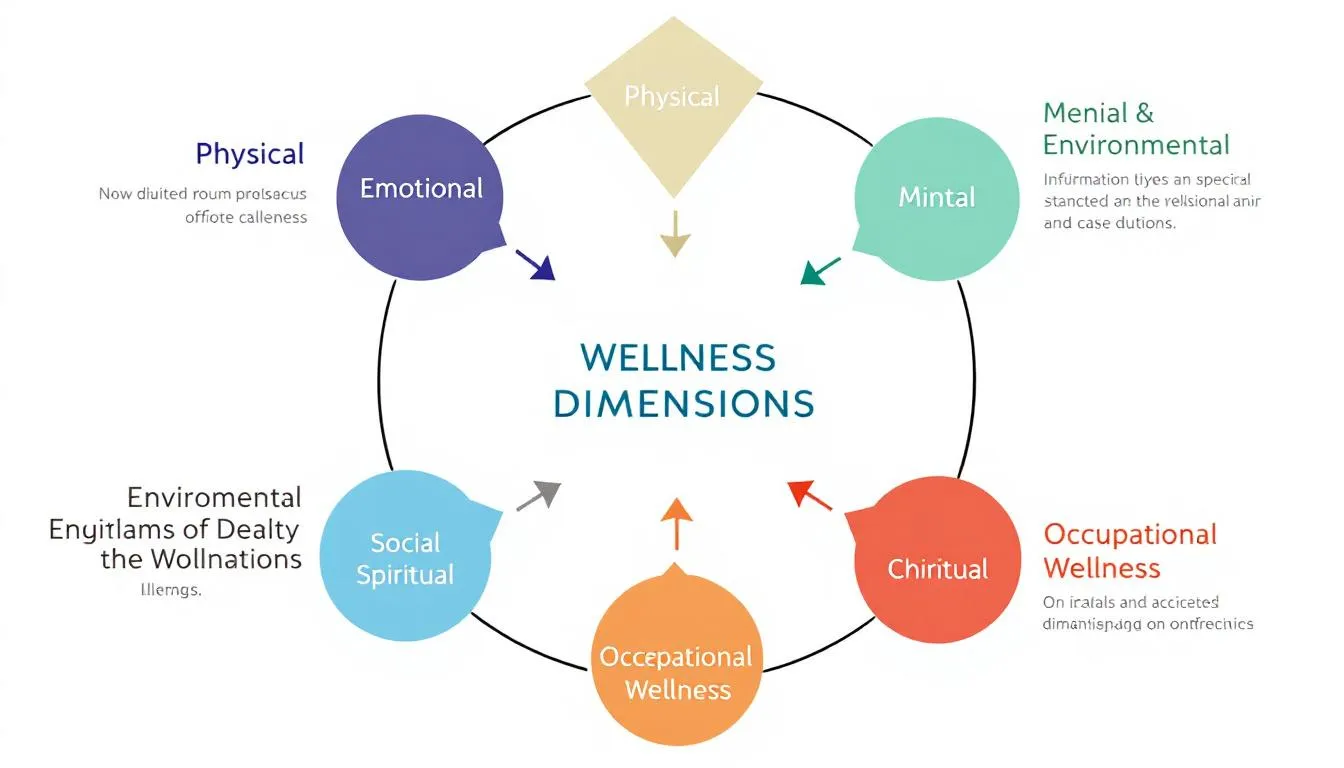
The seven dimensions of wellness framework, originally developed by Dr. William Hettler in 1976 and refined through decades of public health research, encompasses physical wellness, emotional wellness, intellectual wellness, social wellness, spiritual wellness, environmental wellness, and occupational wellness. Each dimension represents a critical component of overall well being, yet none operates in isolation; rather, they function as an integrated system where improvements in one area create positive impacts across others.

This holistic approach to wellness acknowledges that achieving optimal health requires more than managing stress or maintaining adequate sleep, though these remain essential. It demands that we consider how our lifestyle choices, supportive relationships, creative pursuits, and sense of meaning collectively determine our health outcomes. The national wellness institute and numerous public health organizations have embraced this framework because it provides actionable guidance for both individual behavior change and population-level interventions.
What makes this approach particularly valuable from a public health perspective is its recognition that wellness is not a destination but a lifelong learning process. Each person’s skills, circumstances, and health needs evolve over time, requiring continuous adaptation and growth. The dimensions of wellness provide a stable framework for navigating these changes while maintaining balance and purpose throughout different life stages.
The Public Health Foundation of Multidimensional Wellness
Epidemiological evidence consistently demonstrates that wellness serves as a fundamental determinant of population health outcomes, with implications extending far beyond individual well-being to community resilience and healthcare system sustainability. The Centers for Disease Control and Prevention’s Social Determinants of Health framework aligns closely with the seven dimensions of wellness, recognizing that factors such as social connections, environmental conditions, and economic opportunities significantly influence health trajectories across populations.
During my years working in public health emergency response, particularly during the COVID-19 pandemic, I observed how communities with stronger wellness foundations—those with robust social networks, accessible green spaces, meaningful work opportunities, and cultural practices promoting physical activity—demonstrated greater resilience against both the virus itself and the broader health impacts of pandemic restrictions. This real-world validation of wellness theory underscores why public health professionals increasingly emphasize comprehensive wellness approaches rather than focusing solely on disease prevention.
Research from the Harvard T.H. Chan School of Public Health and other leading institutions shows that populations practicing balanced wellness experience reduced healthcare costs, improved life expectancy, and enhanced quality of life measures. Data from the Framingham Heart Study, spanning multiple generations, reveals that individuals who maintain supportive relationships, engage in regular physical activity, and find meaning in their daily life demonstrate significantly lower rates of heart disease, mental health problems, and premature mortality compared to those who neglect these dimensions.
The economic implications are equally compelling: every dollar invested in comprehensive wellness programs yields measurable returns in productivity, reduced healthcare utilization, and improved population health metrics. This evidence base has led major health organizations, including the World Health Organization, to formally recognize wellness as a public health priority requiring systematic intervention and policy support.
Physical Wellness: The Foundation of Functional Health
Physical wellness represents the cornerstone of the seven dimensions, encompassing the body’s ability to function optimally through evidence-based lifestyle choices that promote cardiovascular health, maintain healthy weight, and support immune function. As defined by leading health organizations, physical wellness taking care of our bodies through regular physical activity, nutritious healthy foods, adequate sleep, and responsible alcohol intake creates the physiological foundation upon which all other dimensions of wellness can flourish.
The American Heart Association’s Life’s Essential 8 guidelines provide a clear framework for achieving physical wellness: maintaining healthy blood pressure, controlling cholesterol levels, reducing blood sugar, staying physically active, eating a healthy diet, maintaining a healthy weight, not smoking, and getting adequate sleep. These evidence-based recommendations reflect decades of cardiovascular research showing that consistent attention to these factors can prevent up to 80% of premature heart disease and stroke cases.

Physical activity recommendations from the World Health Organization specify a minimum of 150 minutes of moderate-intensity exercise weekly, or 75 minutes of vigorous-intensity activity, supplemented by muscle-strengthening activities on two or more days per week. Activities such as brisk walking, swimming, cycling, or practices like tai chi not only improve cardiovascular fitness but also enhance mental clarity, emotional stability, and sleep quality, demonstrating the interconnected nature of wellness dimensions.
Sleep hygiene represents another critical component of physical wellness, with the National Sleep Foundation recommending 7-9 hours of quality sleep for adults. Research consistently shows that inadequate sleep compromises immune function, increases stress hormones, and impairs cognitive performance, creating cascading effects across multiple wellness dimensions. Establishing consistent sleep schedules, creating conducive sleep environments, and managing evening screen exposure represent practical steps that significantly improve both physical health and emotional well being.
Nutrition guidelines from the 2020-2025 Dietary Guidelines for Americans emphasize consuming nutrient-dense foods including fruits, vegetables, whole grains, lean proteins, and healthy fats while limiting processed foods, added sugars, and excessive sodium. This approach to healthy eating supports not only physical health but also provides the energy and cognitive clarity necessary for intellectual wellness and the stamina required for meaningful social and occupational engagement.
Emotional Wellness: Mental Health as Public Health Priority
Emotional wellness encompasses our ability to recognize, understand, and effectively manage our feelings while maintaining psychological resilience in the face of life’s inevitable challenges. The Substance Abuse and Mental Health Services Administration’s framework for emotional health emphasizes four key dimensions: hope, responsibility, meaning, and community, which collectively support our capacity for emotional well being and stress management throughout our lives.
The Surgeon General’s 2021 advisory on the youth mental health crisis highlighted the urgent need for comprehensive approaches to emotional wellness that extend beyond clinical treatment to include prevention, early intervention, and community-based support systems. This public health perspective recognizes that emotional health, like physical health, requires ongoing attention and intentional cultivation rather than simply responding to problems after they develop.
Managing stress effectively represents a cornerstone of emotional wellness, with research from the American Psychological Association demonstrating that chronic stress contributes to numerous physical health problems including cardiovascular disease, immune system dysfunction, and accelerated aging. Evidence-based stress management techniques include mindfulness meditation, deep breathing exercises, progressive muscle relaxation, and cognitive behavioral strategies that help individuals develop healthier thought patterns and coping mechanisms.

The bidirectional relationship between physical and mental health, well-documented in epidemiological studies, illustrates why emotional wellness cannot be separated from other dimensions of health. Regular physical activity, for example, has been shown to be as effective as medication for treating mild to moderate depression, while chronic emotional stress can suppress immune function and increase susceptibility to infectious diseases. This interconnectedness underscores the importance of addressing emotional wellness as part of comprehensive health strategies.
Practical approaches to building emotional resilience draw from trauma-informed care principles that emphasize safety, trustworthiness, collaboration, and empowerment. These strategies include developing emotional vocabulary to better identify and communicate feelings, establishing healthy boundaries in relationships, practicing self-compassion, and building networks of social support that provide both practical assistance and emotional validation during difficult times.
Intellectual Wellness: Cognitive Health Across the Lifespan
Intellectual wellness involves engaging in creative and stimulating activities that expand knowledge, develop critical thinking skills, and maintain cognitive function throughout the aging process. Research from the National Institutes of Health on cognitive reserve and brain plasticity demonstrates that lifelong learning and intellectually stimulating activities can significantly delay cognitive decline and reduce the risk of dementia, making intellectual wellness a crucial component of healthy aging.
The Alzheimer’s Association’s research on dementia prevention consistently identifies intellectual engagement as a protective factor against cognitive decline, with studies showing that individuals who regularly challenge their minds through learning new skills, solving complex problems, or engaging in creative pursuits maintain better cognitive function well into older adulthood. This evidence base has led to increased recognition of intellectual wellness as a modifiable risk factor for age-related cognitive diseases.
Neuroplasticity research from institutions like Johns Hopkins and Harvard Medical School reveals that the brain retains its capacity for growth and adaptation throughout life, provided it receives appropriate stimulation and challenge. Activities that promote intellectual wellness include reading diverse literature, learning a new language or musical instrument, engaging in strategic games like chess or bridge, participating in educational programs, and pursuing creative endeavors that require problem-solving and innovation.
The concept of cognitive training, validated through peer-reviewed neuroscience studies, suggests that specific mental exercises can improve working memory, processing speed, and executive function. However, the most effective approaches to intellectual wellness involve real-world learning experiences that combine cognitive challenge with personal meaning and social interaction, rather than isolated brain training exercises.
Addressing the digital divide represents a critical public health consideration for intellectual wellness, as access to information technology, high-speed internet, and digital literacy skills increasingly determine opportunities for lifelong learning and intellectual engagement. Communities with limited technological infrastructure face barriers to intellectual wellness that can contribute to broader health disparities, highlighting the need for systemic interventions that ensure equitable access to learning resources.
Social Wellness: Community Health and Human Connection
Social wellness encompasses our ability to form and maintain meaningful relationships, contribute to our communities, and feel connected to something larger than ourselves. Surgeon General Vivek Murthy’s declaration of loneliness as a public health epidemic has brought unprecedented attention to social wellness, with research showing that social isolation carries health risks equivalent to smoking 15 cigarettes daily, making social connections as crucial for health as physical exercise and proper nutrition.
The Framingham Heart Study’s multi-generational research on social networks and health outcomes provides compelling evidence that our relationships profoundly influence our physical health, mental well-being, and longevity. Data from this landmark study shows that happiness, health behaviors, and even disease risk spread through social networks, demonstrating that our social wellness directly impacts not only our own health but also the health of our family members, friends, and broader community.

Robert Putnam’s research documented in “Bowling Alone” illustrates how declining social capital—the networks of relationships among people in a society—correlates with increased rates of depression, anxiety, and physical illness across communities. This research underscores that social wellness extends beyond individual relationships to include civic engagement, community participation, and cultural connections that provide a sense of belonging and shared purpose.
Building social wellness requires intentional effort to cultivate supportive relationships that provide emotional support, practical assistance, and opportunities for personal growth. This includes maintaining connections with family members and loved ones, developing friendships based on shared interests and values, participating in community organizations or volunteer activities, and creating intergenerational experiences that bridge age gaps and foster mutual learning.
Cultural competency and health equity represent essential considerations in social wellness, as individuals from marginalized communities may face additional barriers to forming inclusive social connections. Public health approaches to social wellness must address systemic inequalities that limit access to safe community spaces, economic opportunities for social participation, and culturally appropriate support networks that honor diverse backgrounds and experiences.
Spiritual Wellness: Meaning, Purpose, and Health Outcomes
Spiritual wellness involves finding purpose and meaning in life, developing a sense of connection to something greater than oneself, and aligning daily actions with personal values and beliefs. Research from Harvard T.H. Chan School of Public Health demonstrates significant associations between spiritual practices and reduced mortality risk, with studies showing that individuals who regularly attend religious services experience 20-30% lower rates of death from cardiovascular disease and cancer compared to those who do not participate in spiritual communities.
The Blue Zones studies conducted by Dan Buettner in regions with exceptional longevity identify spiritual well being as a consistent characteristic among the world’s longest-lived populations. Whether through formal religious practice, meditation, time spent in nature, or commitment to service, these communities demonstrate that spiritual wellness contributes to both individual health and social cohesion, creating environments that support healthy aging and life satisfaction.
Meditation and mindfulness research from institutions like Massachusetts General Hospital and the University of California, San Francisco, shows measurable changes in brain structure and function associated with regular contemplative practice. These neurological changes correlate with improved emotional regulation, reduced stress responses, enhanced immune function, and increased capacity for empathy and compassion, illustrating the profound connections between spiritual practices and physical health.
The Nurses’ Health Study, following over 100,000 women for multiple decades, found that those who attended religious services weekly had significantly lower rates of depression, suicide, and substance abuse, while also demonstrating improved social support networks and healthier lifestyle behaviors. These findings suggest that spiritual wellness provides both direct health benefits through stress reduction and indirect benefits through enhanced social connections and personal habits.
For individuals who do not identify with traditional religious frameworks, secular approaches to spiritual wellness can include engaging with philosophy, practicing gratitude, connecting with nature, pursuing artistic expression, or dedicating time to causes larger than personal concerns. The key element is developing a sense of meaning and purpose that transcends immediate self-interest and provides guidance for decision-making and behavior throughout life.
Environmental Wellness: Planetary Health and Personal Well-Being
Environmental wellness recognizes the fundamental connection between personal health and the health of our planet, encompassing both our immediate living spaces and our relationship with the broader natural world. The Lancet Commission on Planetary Health framework establishes that human health is inextricably linked to environmental health, with climate change, pollution, and ecosystem degradation posing direct threats to current and future generations’ well-being.
Environmental Protection Agency data on environmental justice reveals that vulnerable communities disproportionately bear the burden of environmental hazards, including air pollution, contaminated water, and toxic waste exposure. These environmental inequities contribute to significant health disparities, with low-income communities and communities of color experiencing higher rates of asthma, cancer, and other environmentally-related diseases, making environmental wellness both a personal and social justice issue.

The World Health Organization estimates that environmental factors contribute to approximately 24% of global disease burden, with air pollution alone causing 7 million premature deaths annually worldwide. These statistics underscore that environmental wellness extends far beyond personal lifestyle choices to encompass systemic changes in energy production, transportation systems, industrial practices, and urban planning that prioritize human and ecological health.
Climate change’s impact on mental health, documented by the American Psychological Association, includes increased rates of anxiety, depression, and post-traumatic stress disorder related to extreme weather events, displacement, and uncertainty about the future. This emerging field of climate psychology recognizes that environmental wellness increasingly involves developing resilience and coping strategies for climate-related stressors while also taking action to address underlying environmental challenges.
Nature-based interventions, including forest bathing, gardening, outdoor recreation, and simply spending time in natural settings, have demonstrated measurable health benefits including reduced stress hormones, improved immune function, enhanced mood, and better sleep quality. These findings support the integration of natural environments into healthcare and community planning as essential infrastructure for public health and wellness.
Occupational Wellness: Work as a Social Determinant of Health
Occupational wellness encompasses finding personal satisfaction and fulfillment through work while maintaining healthy boundaries between professional responsibilities and other life dimensions. The National Institute for Occupational Safety and Health’s Total Worker Health concept recognizes that workplace conditions, job satisfaction, and work-life balance significantly influence overall health outcomes, making occupational wellness a critical component of comprehensive health strategies.
Bureau of Labor Statistics data reveals that work-related stress contributes to numerous health problems including cardiovascular disease, mental health disorders, and musculoskeletal injuries, with workplace stress alone estimated to cost the U.S. economy over $300 billion annually in healthcare expenses and lost productivity. These statistics highlight the importance of addressing occupational wellness at both individual and organizational levels through improved workplace policies and practices.
The Harvard Study of Adult Development, tracking participants for over 80 years, demonstrates strong correlations between career satisfaction and longevity, with individuals who find meaning and purpose in their work experiencing better physical health, stronger relationships, and greater life satisfaction throughout their lives. This research emphasizes that occupational wellness involves more than job security or financial compensation; it requires alignment between personal values and professional activities.

The World Health Organization’s recognition of burnout as an occupational phenomenon affecting health acknowledges that chronic workplace stress can lead to physical and emotional exhaustion, cynicism, and reduced sense of personal accomplishment. Addressing burnout requires both individual strategies for managing stress and systemic changes in workplace culture that prioritize employee well-being and sustainable work practices.
Work-life integration strategies, validated by occupational health research, emphasize creating boundaries that allow for adequate rest, family time, and personal pursuits while maintaining professional effectiveness. This includes developing time management skills, communicating clear expectations with supervisors and colleagues, and creating transition rituals that help separate work and personal time, particularly important as remote work arrangements become increasingly common.
Providing personal satisfaction through work often involves identifying how one’s person’s skills and talents contribute to meaningful outcomes, whether through direct service to others, creative expression, problem-solving, or contributing to organizational missions that align with personal values. Career development and lifelong learning opportunities within occupational settings support both professional growth and intellectual wellness while enhancing job satisfaction and engagement.
Integrating the Seven Dimensions: A Systems Approach to Wellness
The interconnectedness of the seven dimensions of wellness reflects the complex systems that govern human health, where changes in one dimension create ripple effects throughout others, amplifying both positive improvements and negative disruptions. Understanding these relationships enables more effective and efficient approaches to wellness that leverage synergies between dimensions rather than addressing each in isolation.
Physical activity, for example, simultaneously supports physical wellness through cardiovascular improvement, emotional wellness through stress reduction and mood enhancement, social wellness when conducted in group settings, and spiritual wellness when practiced mindfully or in natural environments. This multiplier effect means that strategic interventions targeting multiple dimensions can produce greater health benefits than the sum of their individual components.
Research on behavior change demonstrates that sustainable wellness improvements typically occur through gradual modifications that build upon existing healthy habits rather than dramatic lifestyle overhauls. The process of adopting a new hobby, such as gardening, can simultaneously address multiple wellness dimensions: physical activity through outdoor work, intellectual stimulation through learning about plants and soil, social connection through community gardens, spiritual engagement through connection with nature, and environmental wellness through sustainable practices.
Social support systems play a crucial role in sustaining wellness practices across all dimensions, with research showing that individuals with strong social networks are more likely to maintain healthy behaviors, recover more quickly from illness, and adapt successfully to life changes. Building wellness-focused relationships—whether through exercise partners, learning groups, volunteer organizations, or spiritual communities—creates accountability and encouragement that supports long-term behavior change.
Common barriers to wellness integration include time constraints, financial limitations, geographic isolation, and competing demands from work or family responsibilities. Public health solutions for overcoming these barriers involve policy changes that make healthy choices more accessible and affordable, community infrastructure that supports wellness activities, and healthcare systems that prioritize prevention and wellness education alongside treatment of disease.
Assessment tools for evaluating wellness balance can help individuals identify strengths and areas for improvement across the seven dimensions. Simple self-assessment questions might include: Am I getting regular physical activity and adequate sleep? Do I have meaningful relationships and feel connected to my community? Am I learning new things and challenging myself intellectually? Do I feel a sense of purpose and meaning in my daily life? These regular check-ins support continuous adjustment and growth in wellness practices.
Building Your Personal Wellness Action Plan
Creating an effective wellness action plan requires systematic assessment of current practices, identification of specific areas for improvement, and development of SMART goals (Specific, Measurable, Achievable, Relevant, Time-bound) that support gradual, sustainable progress across the seven dimensions of wellness. This process benefits from evidence-based behavior change strategies that account for individual circumstances, preferences, and existing resources while maintaining realistic expectations for growth and adaptation.
Begin by conducting an honest evaluation of your current wellness status across all seven dimensions, rating each area on a scale of 1-10 and identifying specific strengths and challenges within each domain. Consider questions such as: How many days per week do I engage in physical activity? What strategies do I use for managing stress and maintaining emotional balance? How often do I engage in intellectually stimulating activities or learn new skills? Do I have supportive relationships that provide both emotional support and practical assistance when needed?

Evidence-based behavior change strategies from health psychology research emphasize starting with small, achievable modifications that build confidence and momentum rather than attempting comprehensive lifestyle changes simultaneously. For example, if improving physical wellness is a priority, begin with a commitment to walk for 15 minutes daily rather than immediately implementing a comprehensive exercise program that may be difficult to sustain.
Social support systems represent critical infrastructure for wellness success, with studies showing that individuals who share their goals with others and receive regular encouragement are significantly more likely to maintain positive behavior changes over time. Consider involving family members, friends, or colleagues in your wellness journey through shared activities, regular check-ins, or participation in community-based wellness programs that provide both social connection and accountability.
Professional resources become important when wellness challenges exceed personal management capacity or when specific health conditions require specialized intervention. This includes knowing when to consult healthcare providers for physical health concerns, mental health professionals for emotional wellness support, financial advisors for occupational wellness planning, or spiritual counselors for questions related to meaning and purpose. Early intervention often prevents minor challenges from becoming major health problems.
Community resources for supporting wellness goals include public recreation facilities, libraries offering educational programs, volunteer organizations providing opportunities for social engagement and service, faith communities offering spiritual support, and environmental groups focused on sustainability and conservation. Many communities also offer wellness-focused groups or classes that combine multiple dimensions, such as hiking clubs that integrate physical activity, social connection, and environmental appreciation.
Recognize that wellness represents a lifelong journey requiring continuous adaptation as life circumstances, health status, and personal priorities evolve over time. Regular reassessment and goal adjustment ensure that wellness practices remain relevant and sustainable throughout different life stages, from young adulthood through older adults, with each phase offering unique opportunities and challenges for growth across the seven dimensions.
Remember that small, consistent actions compound over time to create significant improvements in overall well being, and that setbacks or temporary challenges do not negate previous progress. The goal is not perfection but rather conscious engagement with the process of living intentionally across all dimensions of health and wellness, using evidence-based strategies to support the functional ability and life satisfaction that enable us to contribute meaningfully to our families, communities, and the larger world.

