Table of Contents
Published: January 18, 2026
Read Time: 24 Mins
Total Views: 343
As an infectious disease physician who has spent decades working in public health, I have witnessed firsthand how knowledge can be the difference between life and death, between thriving communities and struggling ones. During the COVID-19 pandemic, we saw stark evidence of this truth: communities with strong health education foundations were better equipped to understand transmission risks, adopt protective behaviors, and navigate the complex landscape of vaccines and treatments. This experience reinforced what public health professionals have long understood—that health education serves as a cornerstone of both individual wellness and community resilience.
Health education represents far more than simply sharing medical facts or distributing pamphlets about disease prevention. It is a systematic, evidence-based discipline that combines rigorous science with practical application, empowering individuals and communities to make informed decisions about their health and well being. When implemented effectively, health education programs create ripple effects that extend far beyond individual behavior change, transforming entire communities and addressing some of our most persistent health challenges.

What is Health Education?
Health education is the systematic process of informing, motivating, and helping people adopt and maintain healthy behaviors through planned learning experiences that increase knowledge, influence attitudes, and develop skills necessary for maintaining and improving health. The World Health Organization defines health education as comprising consciously constructed opportunities for learning involving some form of communication designed to improve health literacy, including improving knowledge and developing life skills which are conducive to individual and community health.
This definition encompasses several critical elements that distinguish health education from related fields. Unlike simple information dissemination, health education combines evidence-based knowledge with practical skills to promote individual and community well-being through structured, theory-driven interventions. It employs behavioral science principles to understand why people make certain health choices and how to effectively influence those decisions in positive directions.
Health education differs meaningfully from health promotion, though the two fields work synergistically. While health promotion encompasses broad strategies including policy changes, environmental modifications, and community organizing, health education focuses specifically on planned learning experiences designed to enhance health literacy and build individual capacity for healthy decision-making. Public health interventions may include regulatory approaches, environmental changes, or direct service delivery, whereas health education emphasizes voluntary behavior change through enhanced understanding and skill development.
The field operates on several foundational principles that guide effective practice. These include using developmentally appropriate content that matches learners’ cognitive and emotional capacities, ensuring cultural relevance that respects diverse backgrounds and belief systems, and employing assessment-driven strategies that identify priority health issues and measure outcomes systematically. Modern health education also leverages digital platforms, social media, and interactive learning tools to widen reach and personalize content delivery.
Why Health Education Matters: Individual and Community Impact
The evidence supporting health education’s effectiveness in reducing preventable diseases is both extensive and compelling. Comprehensive programs addressing diabetes prevention have demonstrated 20-30% reductions in disease incidence among high-risk populations, while cardiovascular health education initiatives have contributed to significant declines in heart disease mortality over the past four decades. During infectious disease outbreaks, communities with established health education infrastructure consistently show higher vaccination rates, better adherence to protective behaviors, and faster adoption of recommended interventions.
Health literacy—the ability to access, understand, appraise, and apply health information—serves as a critical mediator of these outcomes. Research consistently demonstrates that individuals with adequate health literacy experience 30% lower rates of hospitalization, better chronic disease management, and improved healthcare decision-making compared to those with limited health literacy. This translates directly into improved patient outcomes, reduced medical errors, and more effective utilization of healthcare services.
The economic benefits of health education investment are particularly striking. Meta-analyses of prevention programs consistently show return-on-investment ratios of $3-5 for every dollar spent on health education initiatives, with some programs demonstrating returns as high as $60 for each dollar invested. These savings result from reduced healthcare utilization, decreased emergency department visits, fewer complications from chronic conditions, and improved productivity among participants.
Health education strengthens community resilience during health emergencies, as demonstrated repeatedly during recent global health challenges. Communities with established health education programs showed faster adoption of COVID-19 protective measures, higher vaccination rates, and better adherence to evolving public health recommendations. This resilience stems not just from knowledge acquisition, but from the development of critical thinking skills, trust in public health institutions, and social networks that facilitate information sharing and mutual support.
Measurable Health Outcomes
The quantitative evidence for health education effectiveness spans multiple domains and populations. In communities with comprehensive health education programs, mortality rates from preventable diseases show consistent reductions of 15-25% over five-year periods, with particularly pronounced effects for cardiovascular disease, certain cancers, and diabetes-related complications. Vaccination rates in areas with sustained public health education efforts typically exceed national averages by 10-20 percentage points, contributing to improved community immunity and reduced disease transmission.
Cancer screening participation provides another compelling example of health education impact. Communities implementing culturally tailored education programs about mammography, colonoscopy, and cervical cancer screening have achieved participation rates 30-40% higher than areas relying solely on provider recommendations. These improved screening rates translate directly into earlier detection, better treatment outcomes, and reduced cancer mortality.
Perhaps most significantly, health education demonstrates measurable effects in reducing health disparities among vulnerable populations. Targeted programs addressing social determinants while providing culturally competent education have reduced gaps in diabetes management between racial groups by up to 50%, improved hypertension control in underserved communities by 35%, and increased preventive care utilization among low-income populations by 25-40%.
Core Components of Effective Health Education Programs
The National Commission for Health Education Credentialing (NCHEC) has established eight core areas of responsibility that define competent health education practice. These areas provide a comprehensive framework for understanding the breadth and depth of professional health education work, encompassing assessment of individual and community health needs, planning effective programs, implementing evidence-based interventions, conducting evaluation and research, advocating for health and health education, serving as health resources for individuals and communities, communicating health information effectively, and demonstrating leadership in health education.
Evidence-based strategies form the foundation of effective health education programs, drawing from established behavior change theories that explain how and why people modify their health-related behaviors. Social Cognitive Theory emphasizes the reciprocal interaction between personal factors, environmental influences, and behavior, suggesting that effective interventions must address knowledge, self-efficacy, outcome expectations, and environmental supports simultaneously. The Health Belief Model focuses on individual perceptions of disease susceptibility, severity, benefits of action, and barriers to change, providing guidance for designing messages that motivate behavior change.
The Transtheoretical Model recognizes that behavior change occurs through predictable stages—precontemplation, contemplation, preparation, action, and maintenance—each requiring different intervention strategies. This model has proven particularly useful in designing programs that meet individuals where they are in their change process, rather than assuming universal readiness for immediate action.
Cultural competency and health equity considerations are essential components of effective program design, recognizing that health education must be adapted to meet diverse community needs, languages, beliefs, and contexts. This involves not only translating materials into appropriate languages, but understanding cultural concepts of health and illness, incorporating traditional healing practices where appropriate, and addressing structural barriers that may impede program participation or behavior change.
Assessment and evaluation methods provide the foundation for measuring program effectiveness and ensuring continuous improvement. Formative evaluation guides program development and implementation, while summative evaluation measures outcomes and impact. These processes employ both quantitative and qualitative methods to assess knowledge acquisition, attitude change, skill development, behavior modification, and ultimately, health outcomes and health equity improvements.
Behavior Change Strategies
The Health Belief Model provides practical guidance for designing interventions that address individual decision-making processes. Successful applications include mammography promotion programs that address perceived barriers such as cost, discomfort, and time constraints while emphasizing personal susceptibility and the benefits of early detection. Similarly, diabetes prevention programs use this model to help participants understand their personal risk, recognize the serious consequences of untreated diabetes, and identify practical steps they can take to reduce their risk.
Social Cognitive Theory guides interventions that build self-efficacy—individuals’ confidence in their ability to perform specific behaviors—through modeling, skills practice, and graduated goal setting. Weight management programs exemplify this approach by providing cooking demonstrations, facilitating peer support groups, and setting incremental physical activity goals that build confidence and competence over time.
The Transtheoretical Model supports stage-matched interventions that recognize individuals’ varying readiness for change. Tobacco cessation programs effectively use this framework by providing different interventions for smokers in contemplation (focusing on benefits of quitting and addressing ambivalence) versus those in preparation (providing specific quit strategies and relapse prevention planning).
Motivational interviewing techniques enhance these theoretical approaches by helping individuals explore and resolve ambivalence about behavior change through collaborative, evocative conversation that honors autonomy while building motivation. Peer education models leverage social networks and shared experiences to provide credible, relatable health information and support, particularly effective in addressing stigmatized health issues or reaching marginalized populations.
Addressing social determinants of health through educational approaches requires recognizing that individual behavior change occurs within broader social, economic, and environmental contexts. Effective programs combine individual education with advocacy for policy changes, environmental modifications, and resource development that support healthy choices and remove barriers to positive health behaviors.
Health Education in Schools and Communities
The National Health Education Standards (NHES) provide a comprehensive framework for health education in grades K-12, establishing clear learning objectives across eight content areas: personal health and wellness, nutrition, physical activity, safety and injury prevention, mental and emotional health, tobacco and substance abuse prevention, family life and human sexuality, and community and environmental health. These standards emphasize not just knowledge acquisition, but the development of analytical skills, decision-making abilities, and advocacy competencies that students need for lifelong health management.
Currently, 40+ U.S. states require some form of health education in their school curricula, though requirements vary significantly in scope, duration, and comprehensiveness. States with robust requirements typically mandate health education at multiple grade levels, specify minimum instructional hours, and establish teacher certification requirements. However, implementation challenges persist, including insufficient funding, competing academic priorities, and variations in local commitment to comprehensive health education.
The Health Education Curriculum Analysis Tool (HECAT) provides systematic guidance for evaluating and improving health education curricula, ensuring alignment with national standards, evidence-based content, and developmentally appropriate instruction. This tool has been instrumental in helping school districts assess their current programs and identify areas for improvement, contributing to more consistent, higher-quality health education across diverse educational settings.
Community-based health education extends beyond formal educational institutions through healthcare systems, nonprofits, faith-based organizations, and other community partnerships. Hospitals and health systems increasingly recognize health education as a core component of population health management, offering programs ranging from diabetes self-management to heart-healthy cooking classes. Community health workers play vital roles in these efforts, providing culturally competent education and support in settings where people live, work, and gather.
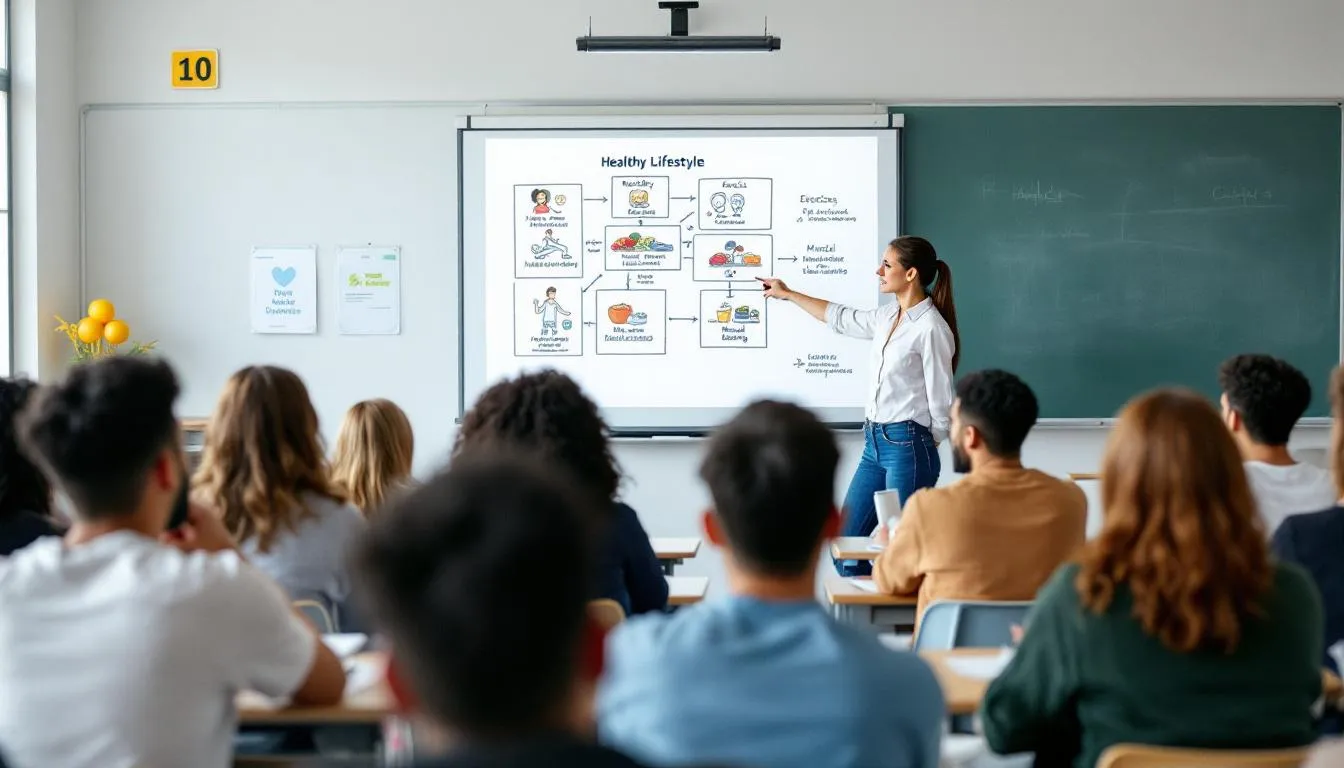
School-Based Mental Health Education
The growing importance of mental health literacy in schools reflects mounting evidence of youth mental health challenges, with rates of depression, anxiety, and suicidal ideation increasing significantly over the past decade. Young people experiencing mental health issues often lack the knowledge and skills to seek appropriate help, recognize warning signs in themselves and others, or access available resources effectively.
The CDC’s Mental Health Action Guide provides evidence-based strategies for supporting student mental health through six key approaches: creating supportive school environments, teaching social-emotional skills, providing mental health services, connecting students to community resources, involving families and communities, and training school personnel. These strategies recognize that effective mental health support requires comprehensive, coordinated approaches that extend beyond individual counseling to address school climate, peer relationships, and community connections.
Teacher training requirements for effective mental health education delivery include understanding adolescent development, recognizing signs of mental health concerns, knowing appropriate response protocols, and developing skills for creating supportive classroom environments. Many states now require mental health literacy training for educators, though implementation varies widely in quality and comprehensiveness.
School health programs that integrate mental health education with broader wellness initiatives show particular promise, addressing the interconnections between physical health, emotional well-being, academic success, and social development. These programs emphasize resilience building, stress management, healthy relationship skills, and help-seeking behaviors while reducing stigma associated with mental health challenges.
Sexual Health Education
The National Sex Education Standards provide evidence-based guidance for comprehensive sexual health education across grade levels, emphasizing medically accurate information, healthy relationship skills, and decision-making competencies. These standards address anatomy and physiology, puberty and adolescent development, identity and relationships, pregnancy and reproduction, sexually transmitted infections, and personal safety.
Research consistently demonstrates that comprehensive sexual health education programs reduce teen pregnancy rates by 20-30% and decrease sexually transmitted infections among adolescents by 15-25% compared to abstinence-only approaches. States implementing comprehensive programs show sustained reductions in unintended pregnancy and improved sexual health outcomes over time.
Controversy surrounding sexual health education often centers on content appropriateness, parental rights, and cultural values, requiring careful navigation of diverse community perspectives while maintaining commitment to medically accurate, evidence-based education. Successful programs engage parents and community members in program development, provide opportunities for family involvement, and clearly communicate educational objectives and content.
Inclusive sexual health education addresses the needs of all students, including those with diverse sexual orientations, gender identities, and family structures. This approach reduces isolation and discrimination while providing relevant, supportive information for all young people, contributing to improved school climate and reduced bullying incidents.
The Health Education Workforce
Certified Health Education Specialists (CHES) and Master Certified Health Education Specialists (MCHES) represent the core professional credentials in the field, administered by the National Commission for Health Education Credentialing to ensure competency standards and professional accountability. CHES certification requires a bachelor’s degree, completion of required coursework, and successful examination performance, while MCHES requires additional graduate-level education and advanced experience.
Career paths for health educators span diverse settings including hospitals and healthcare systems, schools and universities, government agencies, nonprofit organizations, corporations, and consulting firms. In healthcare settings, health educators develop patient education programs, coordinate community outreach initiatives, and support population health management efforts. School health educators teach required health courses, coordinate wellness programs, and collaborate with families and community partners to support student health.
Current employment statistics reflect growing recognition of health education’s importance, with the Bureau of Labor Statistics projecting 4% job growth through 2034, faster than the average for all occupations. The median salary for health educators is approximately $63,000 annually, varying significantly by setting, geographic location, and level of education and experience. Government positions typically offer higher salaries and better benefits, while nonprofit settings may provide greater autonomy and mission alignment.
Educational requirements for health education positions typically begin with a bachelor’s degree in health education, public health, or related field, though many positions prefer or require master’s degree preparation. Master of Public Health (MPH) programs with health education concentrations provide advanced training in program planning, evaluation research, policy development, and leadership skills essential for senior-level positions.
Professional Organizations and Ethics
The Society for Public Health Education (SOPHE), founded in 1950, serves as the primary professional organization for health educators, providing continuing education, advocacy, and professional development opportunities while maintaining a comprehensive Code of Ethics that guides professional practice. SOPHE’s ethical guidelines emphasize respect for individual autonomy, cultural diversity, and social justice while requiring competence, honesty, and accountability in professional activities.
The American Public Health Association (APHA) includes a robust Health Education section that advances the field through research, policy advocacy, and professional networking, contributing to the broader public health infrastructure while maintaining focus on health education’s unique contributions to population health improvement.
The Coalition of National Health Education Organizations (CNHEO), established in 1972, coordinates collaborative efforts among multiple professional organizations to advance health education policy, research, and practice. This coalition has been instrumental in developing competency frameworks, advocating for funding, and promoting recognition of health education’s importance in addressing national health priorities.
Professional development opportunities include continuing education requirements for credential maintenance, conference attendance, research participation, and mentorship activities that support career advancement while ensuring ongoing competency in rapidly evolving health education practice.
Addressing Health Disparities Through Education
Health education plays a crucial role in reducing disparities among racial, ethnic, and socioeconomic groups by providing culturally relevant information, building health literacy capacity, and addressing structural barriers that contribute to health inequities. Research demonstrates that well-designed health education interventions can reduce disparities in diabetes management, hypertension control, cancer screening, and preventive care utilization when they address both individual knowledge gaps and systemic barriers to healthy behaviors.
Targeted interventions for underserved communities require deep understanding of local contexts, including cultural beliefs about health and illness, historical experiences with healthcare systems, economic constraints, and social networks that influence health decisions. Successful programs employ community-based participatory research approaches that engage community members as partners in program design, implementation, and evaluation rather than passive recipients of predetermined interventions.
Community health workers represent a particularly effective strategy for reaching underserved populations with culturally competent health education and support. These frontline public health workers share ethnicity, language, and life experiences with community members they serve, providing credible, trusted sources of health information while navigating cultural and linguistic barriers that might otherwise impede program effectiveness.
Language barriers, varying health literacy levels, and limited access to health resources require innovative approaches to program design and delivery. Successful programs use plain language principles, visual aids, storytelling techniques, and interactive learning methods that accommodate diverse learning styles and educational backgrounds while ensuring essential health information reaches all community members.

Social Determinants and Health Equity
Social determinants of health—including education, income, housing quality, food security, and neighborhood safety—profoundly influence health outcomes and must be addressed through comprehensive approaches that combine individual education with structural interventions. Health educators increasingly recognize that providing information about healthy eating means little without ensuring access to affordable, nutritious food, and promoting physical activity requires safe, accessible recreational opportunities.
Policy advocacy by health educators addresses systemic inequities through legislative advocacy, community organizing, and coalition building that supports policy changes enabling healthier communities for all residents. This includes advocating for increased funding for school health programs, supporting policies that improve access to preventive healthcare, and promoting environmental changes that support healthy behaviors across entire populations.
Collaboration between health education and social services provides comprehensive interventions that address multiple determinants simultaneously. For example, programs addressing maternal and child health might combine nutrition education with assistance accessing food programs, parenting skills training with childcare support, and health information with healthcare enrollment assistance.
Rural areas face particular challenges in health education delivery, including provider shortages, geographic isolation, cultural factors, and limited technology infrastructure. Successful rural health education programs leverage existing social networks, employ trusted community leaders, and use innovative delivery methods such as mobile health units and telehealth technologies to overcome traditional barriers.
Global Perspectives on Health Education
International approaches to health education provide valuable insights into diverse models and strategies for promoting population health through education. Japan’s yogo teachers represent a unique integration of health education into school systems, with specially trained teachers responsible for both health instruction and student health services. Japan’s Shokuiku food education law mandates comprehensive nutrition education throughout the school system, contributing to low childhood obesity rates and strong food culture preservation.
Romania’s development of a national health education curriculum since 2001 demonstrates how countries can systematically integrate health education into educational systems through policy development, teacher training, and resource allocation. This effort has resulted in improved health literacy among young people and better preparation for making informed health decisions throughout life.
The International Union for Health Promotion and Education (IUHPE), established in 1951, coordinates global initiatives to advance health education and health promotion worldwide through research collaboration, professional development, and policy advocacy. IUHPE’s global conferences and working groups facilitate knowledge exchange and capacity building across diverse cultural and economic contexts.
Health education connects directly to United Nations Sustainable Development Goals, particularly Goal 3 (Good Health and Well-being), Goal 4 (Quality Education), and Goal 10 (Reduced Inequalities). International development programs increasingly recognize health education as essential for achieving sustainable improvements in population health, economic development, and social equity.
Global health challenges such as infectious disease outbreaks, environmental health threats, and non-communicable disease epidemics require coordinated international responses that include robust health education components. The COVID-19 pandemic demonstrated both the potential and limitations of health education in addressing global health emergencies, highlighting the need for improved health literacy, trust in public health institutions, and rapid information dissemination systems.
The Future of Health Education: Innovation and Adaptation
Digital health education platforms have transformed the field’s reach and effectiveness, particularly during the COVID-19 pandemic when traditional face-to-face programming became impossible or inadvisable. Online learning platforms, mobile health applications, social media campaigns, and telehealth education sessions enabled continued health education delivery while offering advantages including personalized content, interactive features, and real-time feedback capabilities.
The integration of artificial intelligence and machine learning technologies promises to revolutionize health education through personalized interventions that adapt to individual learning styles, cultural preferences, and behavior change readiness. These technologies can analyze vast amounts of data to identify optimal timing, content, and delivery methods for health education messages, potentially improving effectiveness while reducing costs.
Emerging health challenges including climate change, antimicrobial resistance, and aging populations require innovative health education approaches that address complex, interconnected health threats. Climate change education must help communities understand health risks associated with extreme weather events, air quality degradation, and vector-borne disease transmission while building capacity for adaptation and resilience.
The evolution toward precision public health and targeted educational interventions reflects growing recognition that one-size-fits-all approaches may be less effective than interventions tailored to specific populations, geographic areas, or risk profiles. This approach requires sophisticated data systems, advanced analytics capabilities, and flexible program design that can accommodate diverse community needs and preferences.
Technology and Accessibility
Mobile health apps and social media campaigns have demonstrated particular success in reaching younger populations with health information and behavior change support. However, successful technology-based health education requires careful attention to user experience design, cultural appropriateness, and sustained engagement strategies that maintain participant interest and motivation over time.
The digital divide poses significant challenges for equitable access to technology-based health education, with rural communities, older adults, and low-income populations often lacking reliable internet access, appropriate devices, or digital literacy skills necessary for effective participation. Addressing these disparities requires hybrid approaches that combine technology with traditional delivery methods while investing in infrastructure and capacity building to expand digital access.
Virtual reality and gamification approaches offer innovative possibilities for engaging health education that can simulate real-world decision-making scenarios, provide safe environments for practicing new skills, and increase motivation through interactive, entertaining formats. Early applications in areas such as addiction recovery, mental health support, and chronic disease management show promising results, though long-term effectiveness and cost-effectiveness require further research.

Building a Healthier Future Through Knowledge and Empowerment
The evidence is unambiguous: health education serves as a powerful tool for transforming individual lives and strengthening communities. From reducing preventable diseases and healthcare costs to building resilience against health emergencies and addressing persistent health disparities, well-designed health education programs generate benefits that extend far beyond their immediate participants.
As we face increasingly complex global health challenges—from pandemic preparedness to climate change adaptation—the need for health-literate populations becomes ever more critical. Communities equipped with strong health education foundations will be better positioned to navigate uncertainty, adopt protective behaviors, and advocate for policies that support collective well-being.
The future of health education lies not in choosing between traditional and innovative approaches, but in thoughtfully integrating the best of both to reach diverse populations with effective, culturally appropriate, and evidence-based interventions. This requires sustained investment in health education programs, continued professional development for health education specialists, and recognition of health education as an essential component of comprehensive healthcare and educational systems.
For healthcare providers, educators, policymakers, and community leaders, supporting robust health education represents an investment in our collective future. By promoting health literacy, building individual and community capacity for healthy decision-making, and addressing the root causes of health disparities, health education creates the foundation for healthier, more equitable communities where all people have the opportunity to achieve their full health potential.
The path forward requires commitment from multiple sectors—schools, healthcare systems, government agencies, community organizations, and individual citizens—working together to ensure that accurate, actionable health information reaches every person who needs it. This is not merely a professional responsibility but a moral imperative, recognizing that health knowledge is a fundamental prerequisite for human flourishing in the 21st century.