
Table of Contents
Published: July 22, 2026
Read Time: 37.5 Mins
Total Views: 168
The intersection of artificial intelligence and health misinformation has reached a critical threshold that demands immediate attention from healthcare professionals, policymakers, and the public. When deepfake technology began impersonating trusted medical experts to promote fraudulent diabetes treatments in 2024, it marked a dangerous evolution in how disinformation threatens the foundation of public health systems worldwide.
AI-generated disinformation is also being weaponized in the realm of politics, influencing elections, public opinion, and trust in democratic institutions. These political impacts can further undermine public health systems by eroding confidence in health authorities and destabilizing coordinated responses.
This growing threat represents more than technological curiosity; it constitutes a fundamental challenge to how communities access, process, and act on health related information. Most people rely on trusted sources when seeking health advice, which can be exploited by AI-generated disinformation. With 75% of Australians accessing health services online according to 2021 data, the vulnerability to AI-generated false information has expanded exponentially, creating unprecedented risks for both individual patients and broader public health efforts. A recent scholarly article provides evidence and guidance on how disinformation and public health threats are evolving, offering strategic insights for mitigating these risks.
The scope of this phenomenon extends far beyond simple misinformation campaigns. The growing number of sources most people turn to for health information has contributed to the rapid spread of misinformation across digital platforms. AI technology now enables the creation of synthetic media so sophisticated that it can impersonate doctors, fabricate medical research, and manipulate health communications with alarming precision. As artificial intelligence capabilities continue advancing, the ability to generate convincing but entirely false health content poses risks that could undermine decades of progress in public health response systems.
The Rise of AI-Powered Health Misinformation
AI disinformation in the healthcare context represents a qualitative shift from traditional health misinformation, distinguished by its scale, sophistication, and targeting capabilities. Unlike conventional false health claims that relied on human creation and distribution, AI-powered disinformation campaigns can generate thousands of personalized, authoritative-sounding medical recommendations in minutes, each tailored to exploit specific vulnerabilities in target populations.
 or drag and drop an image here
The year 2024 marked a turning point in this evolution, exemplified by the Diabetes Victoria case where deepfake experts promoted fake diabetes supplements through sophisticated video manipulation. This incident demonstrated how AI technology could weaponize the trusted relationships between patients and healthcare providers, using synthetic media to bypass traditional skepticism toward unverified health claims.
The rise of this phenomenon reflects broader changes in how people seek health information. Research indicates that 82% of Australian parents now use social media platforms for health information alongside doctor consultations, creating multiple entry points for AI-generated misinformation to infiltrate decision-making processes. In this environment, publishing authoritative articles is crucial to support public health initiatives and educate the public, helping to counteract the spread of false information. This shift in information consumption patterns, combined with advances in generative AI models, has created conditions where false health content can achieve unprecedented reach and influence.
The technical sophistication of these campaigns often exceeds human-generated misinformation in both credibility and persuasive power. Large language models can produce medical-sounding content that mimics peer-reviewed research, complete with fabricated citations and statistical data that appear legitimate to non-expert audiences. These models are trained on vast datasets, including medical literature and human feedback, to improve their accuracy and reliability. This capability transforms disinformation from crude conspiracy theories into polished, scientific-appearing content that challenges even trained healthcare workers to identify as fraudulent.
Types of AI-Generated Health Disinformation
The landscape of AI-generated health disinformation encompasses multiple technological approaches, each presenting distinct challenges for detection and mitigation. Understanding these different vectors helps healthcare systems and individuals develop appropriate defensive strategies against this multifaceted threat. The medium of dissemination—such as aerosols, contaminated food, or water—plays a critical role in assessing the impact of bioterrorism and disinformation threats.
Deepfakes in Healthcare
Deepfake technology represents perhaps the most visually striking form of AI-generated health disinformation, using generative adversarial networks to create hyper-realistic video and audio content that can impersonate medical professionals with disturbing accuracy. These synthetic media productions exploit healthcare’s fundamental reliance on verbal communication and visual authority cues that patients use to assess credibility.
The December 2024 Diabetes Victoria case study illustrates the concerning sophistication of these attacks. Fraudsters created convincing deepfake videos of respected diabetes experts endorsing expensive supplements with no scientific backing. The technical quality of these productions was sufficient to fool many viewers, leading to significant financial losses and potentially dangerous health decisions among vulnerable diabetes patients seeking legitimate treatment options.
TikTok has become a particularly problematic platform for medical deepfake content, with sellers manipulating doctors’ videos to falsely endorse products, gaining over 10 million views in documented cases from 2023. These manipulated videos often take genuine medical content and seamlessly insert product endorsements, creating the appearance that licensed physicians recommend specific treatments or supplements that they have never actually endorsed.
The implications extend beyond consumer fraud into clinical practice itself. A 2019 study revealed that radiologists misdiagnosed manipulated CT scans despite being warned about potential tampering, demonstrating how deepfake technology could compromise diagnostic accuracy in healthcare settings. This research highlighted the vulnerability of medical imaging interpretation to AI manipulation, raising concerns about the integrity of medical evidence in clinical decision-making.
Technical details of healthcare-targeted deepfakes often focus on exploiting the profession’s communication patterns. Medical professionals frequently use specific terminology, body language, and presentation styles that AI systems can learn to replicate convincingly. Voice cloning technology has become particularly sophisticated, enabling the creation of audio recordings that can impersonate doctors in phone consultations or recorded medical advice. It is therefore crucial to verify that the person depicted or heard in medical content is authentic, to prevent impersonation and the spread of misinformation.
AI Chatbots and Health Misinformation
The proliferation of AI chatbots in health information seeking has created new vectors for medical misinformation to reach patients and healthcare workers. Large language models like ChatGPT, launched in November 2022, and specialized systems like BioGPT demonstrate both the promise and peril of AI-assisted health communication, producing responses that can appear authoritative while containing significant factual errors.
These AI systems face fundamental training limitations that compromise their reliability for health advice. ChatGPT’s knowledge cutoff dates mean that recent medical developments, drug approvals, or safety warnings may not be incorporated into responses. Furthermore, the lack of real-time medical updates means that AI chatbots may recommend treatments that have been superseded by newer, more effective options, or fail to warn about recently discovered adverse effects.
The risk profile of AI-generated health content often exceeds that of human-written misinformation due to the systems’ ability to produce convincing, detailed responses that appear more credible than obvious conspiracy theories. When patients ask AI chatbots about symptoms, treatments, or drug interactions, the responses may mix accurate information with dangerous errors in ways that are difficult for non-experts to identify.
Perhaps most concerning is the lack of transparency in AI training and monitoring capabilities from developers. Most major AI companies do not provide detailed information about how their systems handle medical queries, what safeguards exist to prevent harmful health advice, or how they update their models to reflect current medical consensus. This opacity makes it difficult for healthcare providers and patients to assess the reliability of AI-generated health information.
Importantly, the phenomenon of AI “hallucinations” poses particular risks in healthcare contexts, where chatbots may fabricate research results, cite non-existent studies, or provide confident-sounding medical advice based on no actual evidence. Evaluating the context and authenticity of AI-generated health information is crucial, as these fabricated responses can appear highly convincing, complete with specific details and authoritative language that mimics legitimate medical guidance.
Impact on Public Health Systems
The infiltration of AI-generated disinformation creates cascading effects throughout healthcare delivery systems, disrupting both individual patient care and broader public health infrastructure. These impacts manifest across multiple domains, from direct patient harm to systemic erosion of trust that undermines the foundation of effective health communication.
Patient data theft represents an immediate and growing concern as deepfake technology enables sophisticated impersonation of healthcare professionals. Criminals use voice cloning and video manipulation to impersonate doctors, nurses, or administrative staff in communications with patients, insurance companies, or healthcare institutions. These attacks can result in unauthorized access to sensitive medical records, insurance fraud, and identity theft that affects both individual patients and healthcare organizations.
Operational disruptions within healthcare facilities have emerged as AI-generated disinformation targets administrative and clinical communication systems. Cases have been documented where fake orders purporting to come from hospital administrators disrupted medical supplies, staffing schedules, or patient care protocols. The extent to which these disruptions have affected patient care and administrative operations varies, but in some instances, critical services have been delayed or compromised, highlighting the magnitude of the threat. These attacks exploit the complex communication networks that modern healthcare systems depend on, creating potential for serious patient safety incidents.
The erosion of trust between patients and healthcare providers may represent the most significant long-term impact of AI-driven health disinformation. When patients encounter convincing but false medical content online, or when healthcare workers struggle to distinguish legitimate information from AI-generated fabrications, the fundamental trust relationships that enable effective healthcare delivery become compromised. This erosion affects not only individual patient-provider relationships but also broader public confidence in health institutions.
 or drag and drop an image here
Delayed treatments and misdiagnoses resulting from manipulated medical information pose direct risks to patient outcomes. When patients receive AI-generated health advice that contradicts professional medical guidance, they may postpone necessary treatments, pursue ineffective alternatives, or make decisions based on fabricated medical research. Healthcare workers themselves may encounter AI-generated content that influences their clinical decision-making, particularly when false information appears in formats that mimic legitimate medical literature.
COVID-19 as a Case Study
The COVID-19 pandemic provided a natural experiment in how AI-amplified disinformation affects public health responses during crisis conditions. Conspiracy theories about vaccines, treatments, and prevention measures spread through social media platforms with unprecedented speed and reach, significantly enhanced by AI systems that could generate personalized misinformation content targeting specific demographic groups and political ideology segments.
State-sponsored disinformation campaigns from Russia, China, and other actors demonstrated how AI technology could be weaponized to undermine public health measures during a global emergency. These campaigns used sophisticated targeting algorithms to identify vulnerable populations and deploy AI-generated content designed to reduce compliance with vaccination programs, mask mandates, and social distancing guidelines.
Research findings reveal that distinct COVID-19 conspiracy beliefs led to different health behaviors, with AI systems enabling the creation of tailored misinformation campaigns that exploited specific concerns within different communities. For example, vaccine hesitancy messages targeting parents focused on child safety concerns, while content aimed at politically conservative audiences emphasized government overreach themes. Certain groups actively engage in conspiracy belief endorsement and pandemic-related behaviors, with their engagement further influenced by exposure to AI-generated misinformation.
The measles resurgence provides quantitative evidence of AI-amplified misinformation’s public health impact, with a 30% global rise in cases linked to antivaccination sentiment that was significantly amplified by AI systems. This data demonstrates how disinformation campaigns can translate directly into disease outbreaks, creating measurable harm to population health outcomes.
The pandemic experience highlighted how AI technology can accelerate the spread of health misinformation beyond what human-generated content could achieve. Automated bot networks, AI-generated social media posts, and personalized disinformation campaigns reached scale and sophistication levels that overwhelmed traditional fact-checking and public health communication efforts.
Vulnerable Populations and Healthcare Systems
Certain populations face disproportionate risks from AI-generated health disinformation due to factors including digital literacy levels, access to authoritative health information, and social circumstances that increase susceptibility to exploitation. Understanding these vulnerabilities helps target protective measures and resource allocation for maximum public health benefit.
Parents represent a particularly vulnerable demographic, with 82% of Australian parents using social media platforms for health information alongside doctor consultations according to 2023 research. This group faces intense information-seeking pressure regarding children’s health decisions, making them targets for AI-generated content about vaccines, treatments, and developmental health concerns. The emotional stakes involved in pediatric health decisions can reduce critical evaluation of information sources, increasing susceptibility to convincing but false AI-generated medical advice.
Global South communities face unique challenges in accessing verified health information, often relying on social media platforms and messaging applications that lack robust content moderation systems. Limited access to healthcare providers and medical resources increases dependence on online health information, while language barriers and cultural contexts make detection of AI-generated misinformation more difficult. These factors create conditions where false health information can spread rapidly through communities with limited capacity for verification or correction.
Elderly populations demonstrate particular vulnerability to audio deepfake scams that impersonate healthcare providers or insurance representatives. Age-related changes in cognitive processing, combined with less familiarity with digital technologies, can reduce ability to detect synthetic audio content. Criminals exploit these vulnerabilities to steal personal health information, commit insurance fraud, or manipulate elderly patients into purchasing unnecessary medical products or services. Examples of real-world incidents include cases where elderly individuals received AI-generated phone calls mimicking family members or doctors, resulting in financial loss or the disclosure of sensitive health information.
Healthcare workers themselves face targeted disinformation campaigns designed to undermine their professional authority and create division within medical communities. AI-generated content may impersonate medical colleagues, fabricate research results relevant to clinical practice, or create false controversies about treatment guidelines. These attacks can affect clinical decision-making, professional relationships, and the ability of health workers to provide consistent, evidence-based care.
The harassment and violence directed at healthcare workers often amplifies through AI-enhanced disinformation campaigns that use deepfake technology, fabricated evidence, and coordinated social media attacks. During the COVID-19 pandemic, AI systems enabled the creation of personalized attack content targeting individual doctors, nurses, and public health officials, contributing to unprecedented levels of threats and violence against medical professionals.
Detection and Identification Methods
Developing effective strategies for detecting AI-generated health disinformation requires understanding both technical indicators and contextual red flags that can alert healthcare professionals and patients to potentially synthetic content. These detection capabilities represent a critical component of defensive strategies against the growing threat of AI-powered health misinformation.
Visual indicators of deepfake videos often include subtle technical artifacts that trained observers can identify, even as the technology continues improving. Blurring around facial edges, unnatural skin discoloration, inconsistent lighting patterns, and jerky or robotic movements may indicate synthetic video content. However, the rapid advancement of deepfake technology means that these visual cues become less reliable over time, requiring continuous updates to detection training and techniques.
Audio analysis for voice synthesis artifacts focuses on identifying technical details that distinguish AI-generated speech from authentic recordings. Timing inconsistencies between audio and video, unnatural breathing patterns, odd pronunciation of medical terminology, and lack of background noise that would be expected in genuine medical settings can indicate synthetic audio content. Advanced voice authentication technologies, such as Pindrop® Passport, are being developed specifically to detect AI-generated speech in healthcare communications.
Context verification represents one of the most reliable methods for identifying potentially false health content, regardless of its technical sophistication. Checking whether claimed endorsements fit the person’s usual behavior patterns, professional background, and institutional affiliations can reveal inconsistencies that indicate AI-generated content. For example, if a pediatrician appears to endorse adult cardiac treatments outside their expertise area, this contextual mismatch suggests potential manipulation. Insights from behavioral sciences can further enhance context verification by helping assess the motivations and decision-making patterns behind disinformation campaigns, providing a deeper understanding of why and how such content is created and spread.
Cross-referencing health claims with official medical sources provides essential verification capabilities that remain effective against AI-generated misinformation. Healthcare workers and patients can verify medical recommendations by consulting peer-reviewed literature, professional medical organizations, and established clinical guidelines. This verification process becomes particularly important when encountering health information that contradicts established medical consensus or promotes treatments not approved by regulatory authorities.
Digital Literacy Skills
Building digital literacy capabilities specifically focused on health information represents a critical public health intervention for reducing susceptibility to AI-generated misinformation. The eSafety Commissioner has developed resources for identifying manipulated content that provide practical guidance for recognizing potential AI-generated health information across various media formats.
Training programs for healthcare workers must address the evolving nature of AI-generated threats, providing regular updates on new detection techniques and emerging attack vectors. It is essential to regularly train staff through simulations and educational programs to improve their ability to recognize synthetic media threats, such as deepfake detection and voice authentication. These efforts should include hands-on experience with identifying deepfake content, understanding how AI chatbots can produce medical misinformation, and developing protocols for verifying suspicious health information encountered in clinical practice.
Verifying endorsements by contacting healthcare professionals directly provides a straightforward method for confirming the authenticity of medical recommendations. When patients encounter health advice attributed to specific doctors or institutions, directly contacting those sources can quickly reveal whether the attribution is genuine. This verification step becomes particularly important for health decisions with significant consequences.
Platform reporting tools offer mechanisms for flagging suspicious health content to social media companies and other online platforms. However, the effectiveness of these reporting systems varies significantly across platforms, and response times may be inadequate for preventing harm from rapidly spreading health misinformation. Users must understand both the capabilities and limitations of these reporting mechanisms.
Education efforts must emphasize the importance of consulting with healthcare providers before making significant health decisions based on online information, regardless of how authoritative that information appears. This consultation step provides an opportunity for medical professionals to identify and correct AI-generated misinformation before it influences patient care decisions.
To stay safe from AI-generated health misinformation, always verify health information and consult with qualified professionals before acting on online advice.
Protection and Mitigation Strategies
Healthcare organizations require comprehensive strategies for protecting against AI-generated disinformation that address both technological vulnerabilities and human factors that enable these attacks to succeed. Effective protection requires coordinated efforts across multiple domains, including technical security measures, staff training programs, and institutional policies that reduce susceptibility to AI-powered manipulation.
Multi-factor authentication and voice verification systems provide essential technical safeguards against impersonation attacks that use AI-generated content. Healthcare facilities must implement robust identity verification protocols that go beyond simple password-based authentication, incorporating biometric factors, hardware tokens, or other verification methods that are difficult for AI systems to replicate convincingly.
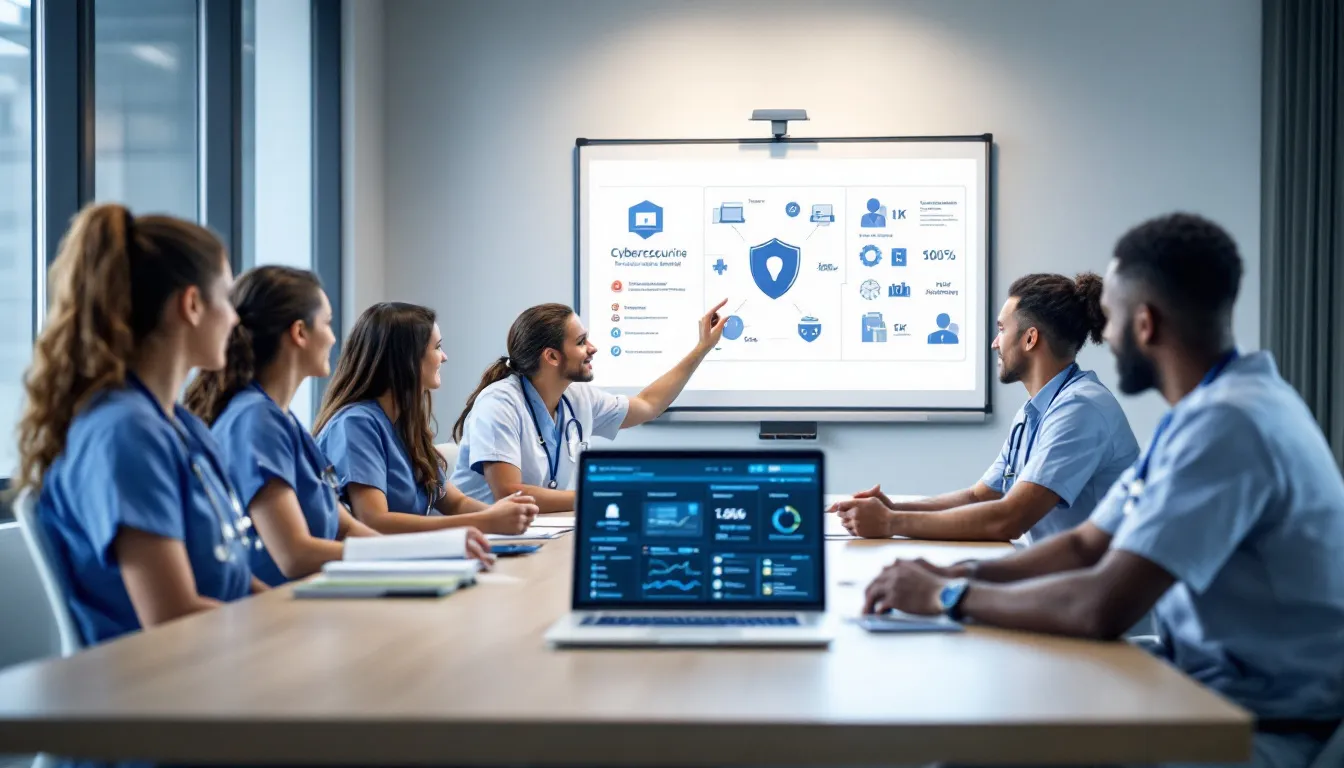
Staff training programs must address the evolving landscape of AI-generated threats, providing healthcare workers with practical skills for recognizing and responding to suspicious communications. These training efforts should include regular phishing simulations that incorporate synthetic media attacks, helping staff develop intuitive recognition capabilities for AI-generated content they may encounter in professional settings.
 or drag and drop an image here
Data encryption and secure communication protocols protect sensitive patient information from unauthorized access through AI-enhanced impersonation attacks. Healthcare organizations must ensure that all communications containing patient data use end-to-end encryption and require multiple verification steps before releasing sensitive information, even to apparently authorized requesters.
Regular security assessments must evolve to address AI-specific threats, including penetration testing that incorporates deepfake attacks, voice cloning attempts, and other synthetic media techniques. These assessments help identify vulnerabilities in communication systems that could be exploited by AI-powered attackers and guide improvements to defensive measures. It is also crucial to understand how threat actors are engaging in new forms of bioterrorism and disinformation using AI technologies, as their motivations and methods continue to adapt alongside technological advancements.
Crisis response protocols should treat significant disinformation events as medical emergencies requiring immediate, coordinated responses. Healthcare organizations need clear procedures for addressing situations where AI-generated content threatens patient safety, public health measures, or institutional credibility, including communication strategies for correcting false information and preventing further spread.
Regulatory and Policy Responses
Australia’s duty of care legislation for social media platforms represents an important step toward holding technology companies accountable for health-related content on their platforms, though implementation challenges remain significant. This regulatory approach requires platforms to demonstrate proactive efforts to prevent and address harmful content, including AI-generated health misinformation that could affect user safety.
Transparency requirements for AI developers regarding health content monitoring represent essential policy developments that could improve understanding of how AI systems handle medical information. Current lack of transparency from major AI companies about their health content policies, training data, and safety measures makes it difficult for healthcare organizations and regulators to assess risks and develop appropriate protective measures.
Partnerships between tech companies and health organizations for content verification offer promising approaches to identifying and addressing AI-generated health misinformation at scale. These collaborations could combine technological capabilities for detecting synthetic content with medical expertise for assessing the potential harm of false health information, enabling more effective responses to emerging threats.
International cooperation mechanisms similar to biological weapons treaties may be necessary to address the global nature of AI-enhanced health disinformation campaigns. State-sponsored disinformation operations often cross national boundaries, requiring coordinated government responses that go beyond what individual countries can achieve through domestic policy measures alone. Effective government responses are crucial for implementing containment measures, countering misinformation, and maintaining public trust during bioterrorism threats and health crises.
Regulatory frameworks must balance the need to address AI-generated health misinformation with concerns about freedom of expression and innovation in AI technology. Overly broad restrictions could limit beneficial applications of AI in healthcare communication, while insufficient oversight may enable continued exploitation of these technologies for harmful purposes.
The Cyber-Bio Warfare Paradigm
The evolution from traditional biowarfare to cyber-bio warfare represents a paradigm shift in how state and non-state actors can achieve biological warfare effects without deploying actual biological agents. Traditionally, biowarfare has depended on the use of a biological agent—such as a harmful microbe or toxin—intentionally released to cause harm, disruption, or fear. In contrast, cyber-bio threats simulate or undermine the effects of biological agents by leveraging disinformation campaigns, achieving similar disruptive outcomes without the actual deployment of pathogens. This new form of warfare exploits natural disease outbreaks and health crises by weaponizing information systems to undermine public health responses, achieving strategic objectives through disinformation rather than direct biological attack.
State-sponsored campaigns demonstrate sophisticated understanding of how AI-enhanced disinformation can weaken target populations without conventional military engagement. Russia’s “firehose of falsehood” model, deployed against vaccination programs and public health measures, illustrates how coordinated disinformation operations can achieve effects traditionally associated with biological terrorism through information manipulation rather than pathogen deployment.
The strategic advantages of cyber-bio warfare include plausible deniability, lower costs compared to developing biological weapons, and the ability to exploit existing health vulnerabilities within target populations. AI technology amplifies these advantages by enabling highly targeted, personalized disinformation campaigns that can exploit specific cultural, political, or demographic vulnerabilities within different communities.
Disinformation campaigns achieve biological warfare effects through multiple mechanisms: creating civil unrest that disrupts healthcare systems, weakening population health by promoting harmful behaviors, and undermining trust in medical authorities during health emergencies. These effects can be as devastating as direct biological attack while being much more difficult to attribute to specific actors or respond to through traditional defense mechanisms.
The COVID-19 pandemic provided evidence of how disinformation can amplify the impact of natural disease outbreaks, suggesting that future pandemics could be weaponized through AI-enhanced information operations. Countries with sophisticated AI capabilities could potentially turn any emerging infectious disease into a strategic weapon by deploying targeted disinformation that maximizes disease spread and minimizes effective response measures.
Defense against cyber-bio warfare requires recognition that information systems represent critical infrastructure for public health security. Protecting against AI-enhanced disinformation becomes as important as defending against traditional biological threats, requiring new frameworks for national security that integrate cybersecurity, public health, and information integrity concerns.
Future Implications and Recommendations
The projected growth of synthetic biology and AI capabilities creates expanding opportunities for sophisticated health disinformation campaigns that could dwarf current threats in scale and impact. As AI technology becomes more accessible and powerful, the barrier to entry for creating convincing health misinformation will continue decreasing, while the potential consequences of successful attacks increase proportionally.
Real-time content authentication systems represent essential infrastructure for maintaining trust in healthcare communications as AI technology advances. These systems must provide immediate verification of medical content authenticity across multiple media types, including video, audio, text, and images, while remaining user-friendly enough for widespread adoption by healthcare workers and patients.
Investment in digital literacy education becomes increasingly critical as AI-generated content becomes more sophisticated and harder to detect through technical means alone. Educational programs must evolve continuously to address new threat vectors and provide practical skills for navigating an information environment where synthetic content may be indistinguishable from authentic material.
Global cooperation between health organizations, technology companies, and governments represents the only viable approach to addressing threats that transcend national boundaries and institutional jurisdictions. This cooperation must include shared threat intelligence, coordinated response capabilities, and common standards for content authentication and platform accountability.
The integration of AI detection tools specifically designed for healthcare contexts requires substantial research and development investment, as generic deepfake detection systems may not address the specific vulnerabilities and use cases present in medical communications. Healthcare-specific detection capabilities must account for medical terminology, clinical communication patterns, and the high stakes involved in medical decision-making.
Industry Best Practices
Healthcare organizations must develop comprehensive disinformation response protocols that treat false information events as crisis situations requiring immediate, coordinated action. These protocols should include clear communication strategies, stakeholder notification procedures, and methods for rapidly correcting false information while minimizing additional harm from publicizing the disinformation.
AI developers should establish partnerships with medical fact-checkers and health organizations to improve their systems’ handling of health-related content. These partnerships could help identify common sources of medical misinformation, develop better training data for AI systems, and create feedback mechanisms for improving accuracy of health-related AI responses.
Media platforms require stronger verification systems specifically designed for health-related content, given the potential consequences of false medical information. These systems must balance the need for rapid content moderation with the complexity of medical information, potentially requiring specialized review processes for health claims that could affect user safety.
Regular security measure updates become essential as AI technology evolves rapidly, making detection and defense capabilities obsolete within months or years. Healthcare organizations and technology companies must establish continuous improvement processes that adapt defensive measures to match advancing AI capabilities.
Professional training programs for healthcare workers must incorporate AI literacy as a core competency, equivalent to other essential clinical skills. Medical education curricula should address both the benefits and risks of AI technology in healthcare, preparing future practitioners to navigate an environment where AI-generated content is commonplace.
Building Resilient Health Information Systems
Creating redundant verification channels for critical health communications ensures that important medical information can be authenticated through multiple independent sources, reducing reliance on any single verification method that could be compromised by advancing AI technology. These redundant systems should operate across different communication channels and verification methods to maintain effectiveness even when individual components fail.
Developing AI detection tools specifically designed for healthcare contexts requires understanding the unique characteristics of medical communication, including professional terminology, citation patterns, and the types of claims commonly made in health-related content. Generic AI detection systems may miss healthcare-specific manipulation techniques or generate false positives on legitimate medical content.
Public-private partnerships for rapid response to health disinformation enable coordination between government health authorities, technology platforms, healthcare organizations, and civil society groups. These partnerships must establish clear protocols for information sharing, response coordination, and resource allocation during health disinformation emergencies.
International standards for authentic health content verification could provide common frameworks for assessing the credibility of health information across different platforms, organizations, and countries. These standards would need to address technical authentication methods, institutional credibility markers, and processes for updating verification criteria as technology evolves.
Building resilience requires acknowledgment that perfect detection of AI-generated content may be impossible as technology advances, necessitating strategies that reduce harm even when false content cannot be reliably identified. This approach emphasizes building community resistance to health misinformation through education, strengthening healthcare provider-patient relationships, and creating institutional frameworks that maintain public trust even in the presence of sophisticated disinformation campaigns.
The challenge of AI disinformation in public health represents one of the most significant threats to health security in the digital age. As artificial intelligence capabilities continue advancing, the potential for sophisticated manipulation of health information grows exponentially, threatening individual patient outcomes and broader public health infrastructure. Healthcare organizations, policymakers, and technology companies must work together to develop comprehensive responses that protect against these emerging threats while preserving the benefits that AI technology can provide for legitimate health communication and care delivery.
Effective response requires recognition that this threat transcends traditional boundaries between cybersecurity, public health, and information integrity. The stakes involved in health decision-making mean that AI-generated misinformation can cause direct physical harm to individuals and communities, making this issue as critical to public safety as traditional security threats. Investment in detection capabilities, education programs, and international cooperation represents essential infrastructure for maintaining health security in an AI-enabled world.
The urgency of this challenge demands immediate action across all sectors involved in health communication and AI development. Delays in implementing protective measures allow AI disinformation capabilities to advance beyond our ability to detect and counter them effectively. The health and safety of communities worldwide depend on our collective ability to stay ahead of this evolving threat through proactive, coordinated, and sustained effort.
The Role of Health Care Providers
Health care providers are at the forefront of the fight against health misinformation, serving as trusted sources of accurate health information for their patients and communities. In an era where false claims can spread rapidly online, the guidance and expertise of health care providers are more critical than ever for supporting public health measures and ensuring that individuals make informed decisions about their health.
By offering clear, evidence-based explanations during consultations, health care providers help patients navigate the overwhelming amount of health information available—much of which may be misleading or outright false. They can teach patients how to critically evaluate online health information, recognize credible sources, and avoid falling victim to disinformation campaigns. This personalized approach not only addresses individual health concerns but also builds lasting trust, which is essential for effective public health efforts.
Beyond individual patient care, health care providers play a vital role in broader public health initiatives. They participate in community education programs, collaborate with other health professionals to design and implement public health strategies, and advocate for policies that strengthen public health infrastructure. During major outbreaks and public health emergencies, such as the COVID-19 pandemic, health care providers are instrumental in disseminating accurate health information, countering rumors, and supporting the implementation of public health measures that protect entire populations. Renowed public health expert, Dr Jay Varma, exemplifies this leadership by providing guidance on infectious diseases and health policies.
Their involvement in these efforts is critical for maintaining public confidence in health systems and ensuring that public health responses are grounded in science and best practices. By working closely with governments, community organizations, and other stakeholders, health care providers help to slow the spread of misinformation, promote positive health behaviors, and safeguard the well-being of communities during times of crisis and beyond.
The Importance of Accurate Information
Accurate health information is the cornerstone of effective public health, especially in a digital landscape where health misinformation can spread at unprecedented speed through social media platforms and other online media. The consequences of widespread misinformation are profound: it can erode trust in health care providers and public health institutions, fuel the adoption of dangerous health practices, and undermine public health efforts on a global scale.
To counter these risks, it is essential that individuals and communities have access to reliable, evidence-based health information. Health care providers, government health agencies, and reputable online resources must work together to ensure that accurate health information is readily available and easy to understand. This collaborative effort is critical for empowering people to make informed health decisions and for supporting the effectiveness of public health measures.
Artificial intelligence and new technologies offer both challenges and opportunities in this context. While AI can be used to generate and spread disinformation, it can also be harnessed to promote accurate health information. For example, AI-powered chatbots can deliver personalized, up-to-date health advice, and machine learning tools can help identify emerging misinformation trends, enabling faster and more targeted public health responses. These technologies, when guided by strong ethical standards and oversight, can enhance the ability of health care providers and governments to protect communities from the harms of misinformation.
Addressing the root causes of health misinformation—such as disparities in education, access to health care, and digital literacy—is equally important. Efforts to improve health equity, strengthen community engagement, and foster critical thinking skills are vital for building resilience against disinformation campaigns.
Ultimately, the provision of accurate health information is a shared responsibility that requires ongoing commitment from health care providers, governments, technology companies, and community organizations. By prioritizing evidence-based communication and leveraging the benefits of new technologies, we can reduce the spread of health misinformation, support public health, and protect the well-being of individuals and communities worldwide.
Introduction to AI Disinformation
The rapid rise of artificial intelligence has ushered in a new era of disinformation campaigns, fundamentally changing how false information is created and spread. AI disinformation now leverages advanced technologies—such as synthetic media, deepfakes, and AI-generated text—to produce content that is not only convincing but also capable of reaching vast audiences in a matter of minutes. This growing threat has far-reaching consequences, from undermining public health efforts to manipulating public opinion and even swaying political outcomes.
For health care providers and health workers, the challenge is particularly acute. The spread of AI-generated disinformation can erode trust in public health measures, disrupt the delivery of accurate health information, and compromise the effectiveness of public health responses. Social media platforms, with their global reach and rapid information sharing, have become prime battlegrounds for these disinformation campaigns, making it even more critical for everyone to engage in critical thinking when consuming health-related content.
As the threat of AI disinformation continues to grow, it is essential for health care providers, health workers, and individuals to stay vigilant. By promoting accurate health information, supporting evidence-based public health measures, and fostering a culture of skepticism toward unverified claims, we can collectively strengthen our defenses against the spread of harmful disinformation and protect the integrity of public health efforts.
Synthetic Media and AI Disinformation
Synthetic media—encompassing deepfakes, AI-generated audio recordings, and manipulated images—has emerged as a powerful tool in the arsenal of disinformation campaigns. This technology enables the creation of highly realistic but entirely fabricated content, making it increasingly difficult for both the public and health systems to distinguish between genuine and false information. The technical details behind synthetic media, such as advanced neural networks and machine learning algorithms, allow for the seamless imitation of real people, including health care providers and public health officials.
The consequences of synthetic media in the context of health misinformation are profound. False videos or audio recordings can be used to impersonate trusted health experts, spread dangerous medical advice, or disrupt public health response efforts during crises. For example, a deepfake video of a doctor endorsing an unproven treatment can quickly go viral, leading to widespread confusion and potentially harmful behaviors.
To address these risks, governments, health systems, and individuals must invest in robust monitoring capabilities and support ongoing research into the detection of synthetic media. Promoting media literacy is also essential, equipping the public with the skills needed to critically evaluate digital content and recognize potential signs of manipulation. By staying informed about the latest developments in synthetic media technology and supporting efforts to detect and counteract its misuse, we can help safeguard the integrity of health information and protect public health.
Health Misinformation and Its Consequences
Health misinformation poses a serious threat to individuals and communities, with consequences that can range from the spread of preventable diseases to the misuse of medical treatments and even loss of life. The rise of AI-powered disinformation campaigns has amplified these risks, enabling the rapid creation and dissemination of false health information on a scale never seen before. This undermines public health efforts, disrupts vaccination campaigns, and hampers effective responses to disease outbreaks.
Health care providers and health workers are on the front lines of this battle, working tirelessly to promote accurate health information and support public health measures. However, the sheer volume and sophistication of AI-generated misinformation circulating on social media platforms make their job increasingly challenging. Disinformation campaigns can erode public trust, fuel skepticism toward proven interventions, and create confusion during critical moments, such as major outbreaks or public health emergencies.
To combat these risks, it is essential for everyone—health care providers, health workers, and individuals alike—to engage in critical thinking when encountering health information online. Supporting public health measures, promoting media literacy, and verifying information with trusted sources are key strategies for reducing the spread and impact of health misinformation. By working together, we can strengthen public health efforts and ensure that accurate, evidence-based information prevails.
The Role of Individuals in Combating AI Disinformation
Every individual has a vital role to play in the fight against AI disinformation. As the spread of false information becomes more sophisticated and widespread, personal vigilance and proactive engagement are more important than ever. By practicing critical thinking when consuming content on social media platforms, individuals can help identify and stop the spread of misleading or harmful information before it gains traction.
Promoting media literacy within communities is another powerful tool. By sharing knowledge about how to spot deepfakes, AI-generated text, and other forms of synthetic media, individuals can empower others to make informed decisions about their health. Reporting suspicious content—such as manipulated videos or questionable health claims—to relevant authorities or platforms helps disrupt disinformation campaigns and supports broader public health efforts.
Supporting research and the development of new technologies aimed at detecting and countering AI disinformation is also crucial. By advocating for innovation and staying informed about the latest advancements, individuals can contribute to a safer, more resilient information environment. Ultimately, by working in partnership with health care providers, governments, and technology companies, individuals can help reduce the risks and consequences of AI disinformation, ensuring that accurate health information remains at the forefront of public health.

